
Edited by Angeli Alexia
“So what did I, the vile one, do? I just described what I had witnessed. And nothing more. I deliberately do not write about all the other “charms” of the path I have chosen. About poisoning. About detention. About threats in letters and on the internet. About death threats… I think these are anyway small things. The main issue is to have a chance to do the main thing…”
Vladimir Putin has served as the President of the Russian Federation for 26 years now, having been elected in March 2000. This period has been characterized by the conflict in Chechnya. He soon initiated measures to reassert central control and build a government rooted in corruption and fidelity to Putin’s government itself1. And from that moment on, he changed the Constitution, which formerly limited presidents from serving more than two consecutive terms and effectively stifled authentic electoral competition, and continued to win elections. In 2021, he passed legislation that would enable him to maintain the presidency until 2036, potentially becoming the longest-serving leader of Moscow since the Russian Empire.
“We are hurtling back into a Soviet abyss, into an information vacuum that spells death from our own ignorance. All we have left is the internet, where information is still freely available. For the rest, if you want to go on working as a journalist, it’s total servility to Putin. Otherwise, it can be death, the bullet, poison, or trial—whatever our special services, Putin’s guard dogs, see fit”.

Image 1: Proekt’s calculations based on the data of Russian courts and data of the State Archive, Istochnik 6/1995
In such a system, repression is the key. Not by chance, the number of people convicted on political charges during his most recent presidential term alone exceeded those recorded in the USSR. Over the past six years, about 116.000 people have been subjected to direct repression, although the actual count is likely to be higher. It has been observed that Russia continued to prosecute its citizens for violating Covid restrictions long after they had been lifted2. As these remarks show, many are the deaths associated with the Kremlin leader. The most recent news regarding this topic pertains to Alexei Navalny, the opposition leader who died after being held in the Arctic Circle. The list also includes former intelligence member Alexander Litvinenko, former head of Wagner Yevgeny Prigozhin, potential political successor Boris Nemtsov, Kremlin insider Boris Berezovsky and associates, top manager Ivan Pechorin, Igor Nosov and Aleksandr Subbotin, former head of the Moscow Aviation Institute Anatoly Gerashchenko, businessman Nikolai Glushkov, Lukoil’s chairman Ravil Maganov, Gazprom’s top executive Leonid Shulman and Alexander Tyuyakov, gas magnate Mikhail Watgord, billionaire Vasily Melnikov along with his wife and two children, oligarch Sargey Protosenya along with two family members, oligarch Vladislav Avayev with wife and a daughter, director of a Sochi ski resort Andrei Krukovsky, multi-millionaire Yuri Voronov, an unidentified diplomat, Sputnik founder Yegor Prosvirnin, investment banker Dan Rapoport, and scientist Alexander Kaganski3. Many others are political prisoners4, have been arrested for posting, liking or sharing content on social media, for protesting, for becoming political candidates, and there have also been instances of fabricated charges. The conditions under which these people find themselves are, at very least, open to question.
The author

Image 2. Colin McPherson/Corbis via Getty Images, 2005
Among these names, one in particular merits attention: Anna Politkovskaya, Russia’s greatest investigative reporter. Born and raised in New York as the daughter of Ukrainian UN diplomats, she was part of a Soviet elite that was able to smuggle banned books out of the country and freedoms that had been forgotten by the normal Russian population at large. Following her graduation from Moscow State University’s Department of Journalism in 1980, she joined the journal Izvestia. Subsequently, she transitioned to the independent press, initially contributing to Obshchaya Gazeta and later to Novaya Gazeta. While she had never considered a career as a war correspondent, the conflict in Chechnya, which she analyzed in a series of articles and two books examining atrocities committed in Russia’s name5, presented a unique opportunity to do so.
“I was interested in reviving Russia’s pre-revolutionary tradition of writing about our social problems. That had me to writing about the seven million refugees in our country. When the war started, it was that that led me down to Chechnya.”
Her first book, “A Dirty War: a Russian reporter in Chechnya”, was published in 2001 and described Russian human rights abuses during the two Chechen wars, focusing on civilians.
The book
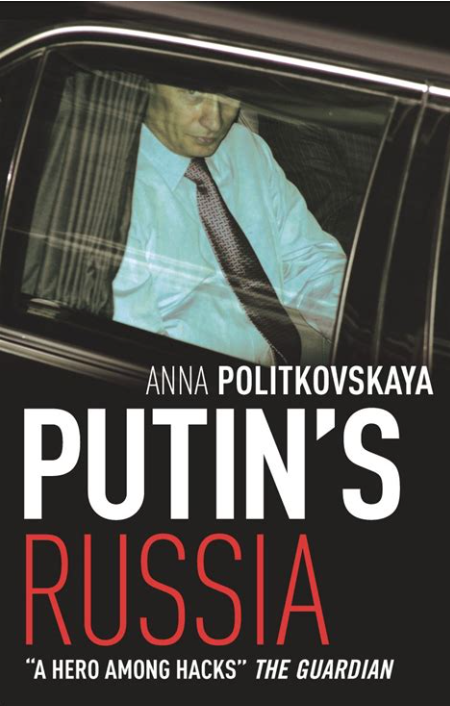
Image 3. The book “Putin’s Russia: life in a failing democracy”, published in 2004 by Harvill Press
To comprehend the inner workings of the Kremlin from an insider’s perspective, it is essential to consult her second book, “Putin’s Russia: Life in a failing democracy”, published in 2004. Collecting a series of reports and investigations, it describes how new Russians accumulated wealth through a network of corruption in the early years of the regime. The novel stems from soldiers’ life in the army to the condemnation of the violence used in the war in Chechnya, which saw kidnappings, extrajudicial killings, rape, torture and terrorism as “normal weapons”. Throughout the book, the author underlines how the state treats individuals as expendable, denying legal recourse, breaching civic trust, and forcing people into corruption for survival.
A major theme is the FSB’s functioning as a criminal enterprise, characterized by documented instances of arbitrary arrests, torture in police custody, fabricated cases and impunity for security forces. The author demonstrates throughout the whole book that Putin has established an authoritarian regime, centralizing power around the presidency, neutralizing independent institutions, and using violence as a customary instrument of governance – escalating into well-accepted political apathy and public passivity. The aspect she criticizes the most, being so concentrated on ordinary people, is in fact this very passivity, which enables the consolidation of the authoritarian regime. The government he designed revolves around him, obsessed with control, secrecy and loyalty, and Chechnya serves as a paradigmatic illustration of this trajectory, rather than an exception. The present volume is of particular importance because it now appears to have predictive value, given that it was published during Putin’s first presidency and this authoritarian turn was not yet evident.

“People often tell me that I am a pessimist, that I don’t believe in the strength of the Russian people, that I am obsessive in my opposition to Putin and see nothing beyond that. If anybody thinks they can take comfort in the “optimistic” forecast, let them do so. It is certainly the easier way, but it is a death sentence for our grandchildren”
The armed conflict in the autonomous region of Chechnya officially began on December 11, 1994 when Russian President Boris Yeltsin launched an armed response to a bid there. Between December 1994 and August 1996, when the accords that brought an end to the first Chechen war were signed, an estimated 8000 Russian troops were killed or listed as missing and 50.000 wounded. In addition, 50.000 to 100.000 Chechen civilians lost their lives6. Escalating violence sparked again in the second Chechen war in August 1999, as President Yeltsin’s health was deteriorating. At this point, former spy chief and newly elected Prime Minister Vladimir Putin increasingly took the lead, eventually assuming full charge and becoming Acting President on December 31, 1999. This new conflict saw once again systematic human rights violations against civilians, and the Russian government voluntarily failed to provide humanitarian assistance. Soon after the Chechens were defeated, the insurgents suffered several hundred fatalities. In May 2000, Moscow announced the appointment of a new pro-Russia leader, Chechen Muslim cleric Mufti Akhmed Kadyrov, and three years later, a new constitution was approved. The second Chechen war officially finished in 2009; nevertheless, separatists persisted in perpetrating acts of guerrilla warfare and terrorism within the region and beyond, eschewing large-scale operations. War crimes and mass graves continued to be discovered, but the Russian government engaged in a systematic effort to eliminate evidence of these atrocities, including the initiation of legal prosecutions7.
“If in Yeltsin’s times we lived from one of his diseases to the next, we now live from one special operation to the next”
In recognition of her unwavering commitment to democratic principles and the pursuit of accountability, Anna Politkovskaya was subjected to a series of abhorrent actions, including kidnapping, entrapment in a subterranean prison, poisoning, persecution, compelled escape, and threats of sexual violence. Her friends shunned her, her husband left, and her son begged. She always returned.
In the final months of her life, she was working on Ramsan Kadyrov, the son of a murdered Chechen president, who was trying to let himself into this sick system. The findings of this research were intended to be published through Novaya Gazeta, but she never submitted the article. According to her, Kadyrov had been telling everyone that her days were numbered.
Turned out these numbers were very low.
“The women in the crowd tried to conceal me because they were sure the Kadyrov people would shoot me on the spot if they knew I was there. They reminded me that Kadyrov publicly vowed to murder me. He actually said during a meeting of his government that Politkovskaya was a condemned woman.”
On October 7, 2006 – Vladimir Putin’s birthday – she was murdered. She received four bullets at point-blank range (a classic sign of a professional hit) returning home from grocery shopping. The assassin had been waiting for her in the hall. Her body slumped in the elevator since neighbours raised the alarm. The investigation spanned many years, but eventually all the people involved, from the organizers to the intermediaries, were identified. Most of them were affiliated with a Chechen mafia clan known to have ties with the FSB. In 2014, two of them were sentenced to life imprisonment, while three others received long prison sentences8. The orchestrator, Sergei Khadzhikurbanov, was released from prison early in exchange for his cooperation in Russia’s invasion of Ukraine. In July 2018, the European Court of Human Rights acknowledged that the investigation “failed to look properly into who commissioned the crime” and granted relatives a compensation of 20.000 euros9. The only person who remains unnamed is the one who ordered the murder.
Her children, Ilya and Vera, are continuing to seek the truth and have condemned recent updates. Ilya has spoken about “words of war”, a film about his mum released in May 2025 in the US with Sean Penn as one of the producers. Vera became a journalist herself and recently published the book “One Mother – Life and passion for truth by Anna Polikovskaya”.
“I often wonder if Putin is human at all, or a frozen or iron statue? I wonder and can’t find confirmation that he is a human being.”
- Britannica, G. A. Hosking, the Putin presidency, 27 January 2026, https://www.britannica.com/place/Russia/The-Putin-presidency ↩︎
- Proekt, E. Reznikova and A. Korostelev, “2024 a study into repression under Putin”, 22 February 2024, https://www.proekt.media/en/guide-en/repressions-in-russia-study/ ↩︎
- Euronews, A. Brezar, “a list of oligarchs and Putin critics’ suspicious deaths since war in Ukraine began”, 3 September 2022, https://www.euronews.com/2022/09/22/accidental-defenestration-and-murder-suicides-too-common-among-russian-oligarchs-and-putin
↩︎ - Memorial Human Rights Center, “list of political prisoners (excluded those persecuted due to religion)”, https://memohrc.org/ru/pzk-list ↩︎
- The Guardian, D. Hearst, obituary of Anna Politkovskaya, 9 October 2006, https://www.theguardian.com/news/2006/oct/09/guardianobituaries.russia ↩︎
- VOA, M. Gutkin V. Kupchinetsky N. Latukhina and V. Vladimirov, “first Chechen war: the moment when Russia’s democratic post-Soviet dream ended”, 12 December 2024, https://www.voanews.com/a/first-chechen-war-the-moment-when-russia-s-democratic-post-soviet-dream-ended-/7899845.html ↩︎
- Oxford learning link, “holding a decaying empire together: the war in Chechnya and its aftermath”, https://learninglink.oup.com/access/content/baylis-strategy7e-student-resources/baylis-strategy7e-case-study-the-war-in-chechnya-and-its-aftermath ↩︎
- NHC, “Anna Politkovskaya: the journalist who refused to stop criticizing Russian authorities”, 6 October 2023, https://nhc.no/en/anna-politkovskaya-the-journalist-who-refused-to-stop-criticizing-russian-authorities/ ↩︎
- ECHR 260 (2018), https://rm.coe.int/echr-followup-on-alert-investigation-of-journalist-anna-politkovskaya-/16808c5846 ↩︎


Leave a Reply