

Edited by Andrea Corinaldesi
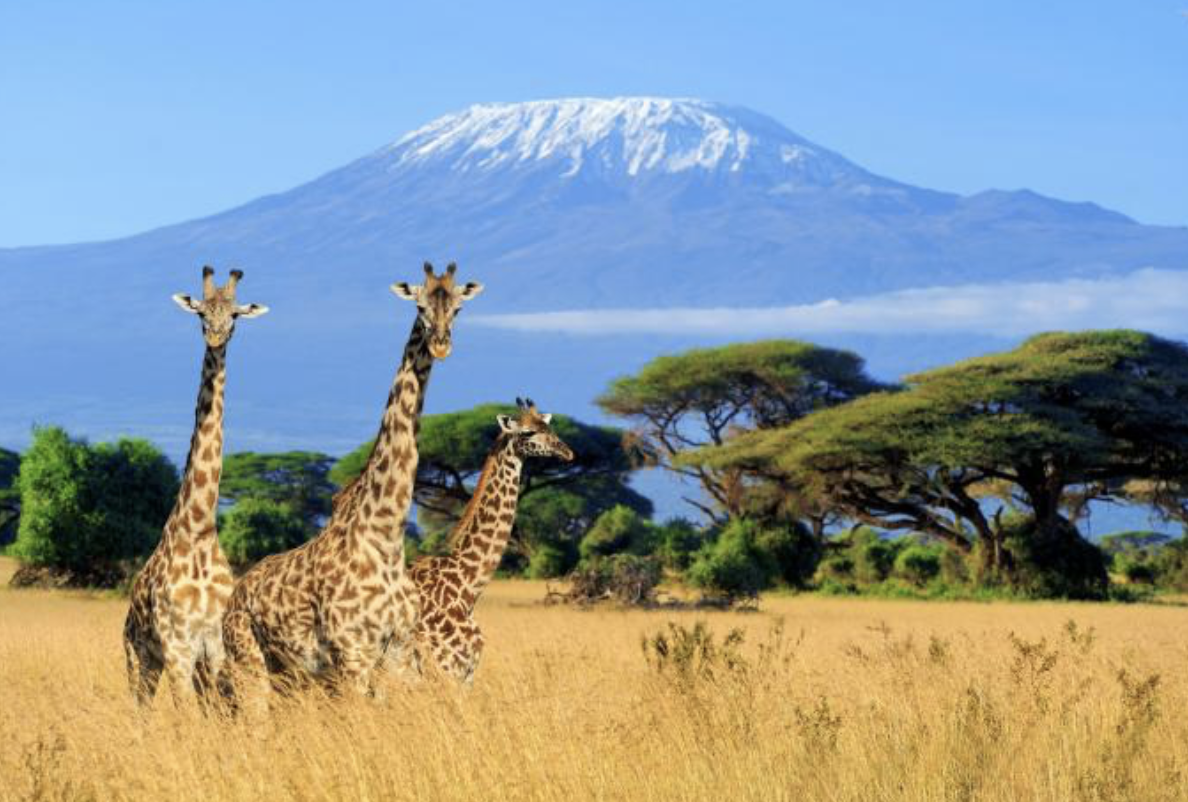
Cover image. https://www.aldi-suisse-tours.ch/it/offerte-di-viaggi/africa/kenya-e-tanzania-safari-hotel-e-lodge-9837724
This article belongs to the Class Material category and represents an individual reworking of the group project developed for the EVE Fall School 2025, titled “PARADISE FOR WHOM? The Hidden Costs of Luxury Tourism in Tanzania and Kenya”, by Ines Caruso, Andrea Corinaldesi, Mariele Salotti, and Cornelia Van Graan.
A Dream Sold Online: The Aesthetic of African Luxury
When we scroll through social media, Africa often appears like a picture-perfect movie: lions, zebras, gazelles, and then swimming pools, expensive hotels, enchanting beaches, palm trees (lots of them), colourful food, khaki suits, and jeep cars. Images that seemingly serve as metonyms, using one part to describe the whole. Africa, seen through the eyes of the wealthiest tourists, seems far removed from the more common images of war, famine, poverty, and coups. Two countries, more than any other, embody this idea of exotic luxury: Kenya and Tanzania.
The Rise of Luxury Tourism: Exclusive Experiences, Unequal Gains

The “High-Value, Low-Impact” Myth
The promoted idea is “high-value, low-impact” (high economic value with low environmental impact). However, recent research and field cases highlight that this model presents many weaknesses, particularly in terms of the environment and local rights. For example, a study by the University of Manchester notes that luxury tourism in Africa “often fails to deliver significant benefits to local communities and can cause more harm than good.”1
Kenya as a Case Study: Growth, Dependence, and Vulnerability
Having said this, the tourism sector – and luxury tourism – presents critical challenges: environmental, economic, social, and cultural impacts, exacerbated by the rise of mass tourism. Focusing on Kenya for now, in 2019, tourism contributed 8.2% of GDP and generated 1.6 million jobs, making Kenya the third largest tourism-based economy in sub-Saharan Africa.
Kenya, located in East Africa, has many and varied tourist attractions: natural landscapes, wildlife in pristine habitats, beautiful coastal beaches, and a rich cultural diversity resulting from 45 ethnic communities. Kenya’s main tourism products are: safaris (based on wildlife and nature), coastal tourism (beaches and local culture), and business/conference tourism. According to the study “An Assessment of the State and Impact of Tourism Activities in Kenya” (2021) by Elif Gündüz and Collins Ouma Agayį, some challenges facing Kenyan tourism include: excessive dependence on the international market; the seasonal nature of some tourism activities; safety and security concerns; sustainability challenges and insufficient tourism infrastructure; and poor innovation and marketing. The authors also note that the COVID-19 pandemic has caused a decline in tourism revenue of approximately 60%, with the international market particularly affected (81.3% cancellations), followed by the domestic and regional markets. Past global events, such as the 2008 financial crisis and terrorist threats, have also impacted tourist arrivals and the sector’s revenue. 2
Structural Flaws: Carbon Costs and Revenue Leakage
Still speaking of Kenya, nature and wildlife are key attractions, but growing tourism can exceed the carrying capacity of ecosystems, causing environmental degradation, deforestation, pollution, and damage to natural habitats. The growth of coastal tourism has also brought problems in this regard, causing pollution, and overexploitation of marine resources, such as coral reefs, beaches, and lagoons.
From a cultural, as well as economic and environmental, perspective, local communities (such as the Maasai) are sometimes evicted to create conservation areas, with inadequate compensation, generating human-wildlife conflict and social tensions. Several articles have been written about this specific case, including one in the Africanist magazine “Nigrizia,” founded in the 19th century to report on Africa and still active today. The Maasai (or Maasai) are a people who live in the highlands of Kenya and Tanzania, on the border between the two countries. For this reason, their current status is crucial to our research.
Greenwashing and the Illusion of Sustainability
Two of the major problems of luxury tourism in Africa are “tourist greenwashing” and “wilderness ideology”, particularly visible in the case of safaris and hotels in Tanzania and Kenya. Tourism greenwashing tends to present the products (and places, we might say) it sells as eco-friendly and environmentally friendly without providing sufficient evidence to support these claims. Specifically, according to the paper “Hotels Industry: The Role of Green Transparency and Green Authenticity” by Mansour Alyahia and others:
The labels “eco-lodge,” “green safari,” or “carbon-neutral resort” thus end up masking unbalanced economic and ecological dynamics, attracting environmentally sensitive tourists (often including social media influencers who profess to be interested in this topic) and legitimizing policies aimed at building private reserves, wildlife corridors, or high-end tourism concessions.
Fortress Conservation: A Colonial Legacy Rebranded
This last situation perfectly describes the wilderness ideology mentioned above. This ideology, criticized as early as the 1990s by Indian historian and environmentalist Ramachandra Guha (especially in “Radical American Environmentalism and Wilderness Preservation: A Third World Critique (1989)”), concerns a Western vision of wilderness “without people,” described by him as a colonial myth used to justify the exclusion of indigenous peoples from their territories. It has to do with fortress conservation, a model based on the idea that biodiversity should be protected by creating protected areas where ecosystems function in isolation from human interference. This, in turn, ties in with the colonial idea that African nature must be devoid of humans to be authentic.
According to the authors Domínguez & Luoma (2020), peculiar characteristics of this phenomenon include the exclusion of local populations from protected areas, rigorous surveillance of the zones in question, and the potential use of coercion to enforce boundaries. Only certain activities are considered “appropriate” within these areas: tourism (safaris), scientific research, and controlled hunting.3
The MaasaiCrisis between Kenya and Tanzania: Conservation at What Cost?

According to another article, the numbers are higher: in the Ngorongoro Conservation Area (northern Tanzania), authorities are planning the forced displacement of around 80,000 Maasai by 2027. Maasai communities, traditionally pastoralists, currently have access to only 4% of the protected area due to restrictions (grazing limits, a ban on new housing, and a cap on the number of animals per person). According to some researchers, the goal is to create an “imaginary, empty, wild, and intact nature” to favor more economically profitable tourism reserves or hunting areas. There are also serious allegations: according to the Maasai, the authorities distributed contaminated (lead-containing) livestock feed, causing the deaths of many animals.
Those who oppose the eviction face violence: there are reports of arrests, use of force by rangers, and human rights violations. Anyway on August 18, 2024, thousands of Maasai protested, blocking a key road between Ngorongoro and the Serengeti, demanding the restoration of essential services (schools, water, healthcare) and a halt to demolitions. The structural imbalance manifests in tangible social friction. In Kenya, a local activist filed a lawsuit to block the opening of a new Ritz-Carlton safari in the Maasai Mara, highlighting how exclusive developments restrict access to land and water resources long utilized by pastoralist communities.
Conclusion: Paradise for Whom?
Luxury tourism in Kenya and Tanzania presents itself as sustainable and exclusive, but beneath the surface lies a complex web of inequalities, environmental pressures, and contested land rights. What is marketed as paradise for a few often comes at a significant cost for many.
- https://www.reuters.com/world/africa/luxury-tourism-africa-often-fails-benefit-locals-new-research-shows-2025-08-19/. ↩︎
- Gündüz, E. and Agayi, C.O. (2021). An Assessment of the State and Impact of Tourism Activities in Kenya, Kent Akademisi, Volume, 14 (45), Issue 1, 174-185. ↩︎
- L. Domínguez and C. Luoma, Decolonizing Conservation Policy: How Colonial Land and Conservation Ideologies Persist and Perpetuate Indigenous Injustices at the Expense of the Environment, February 2020. ↩︎