

Edited by Fall Sokhna
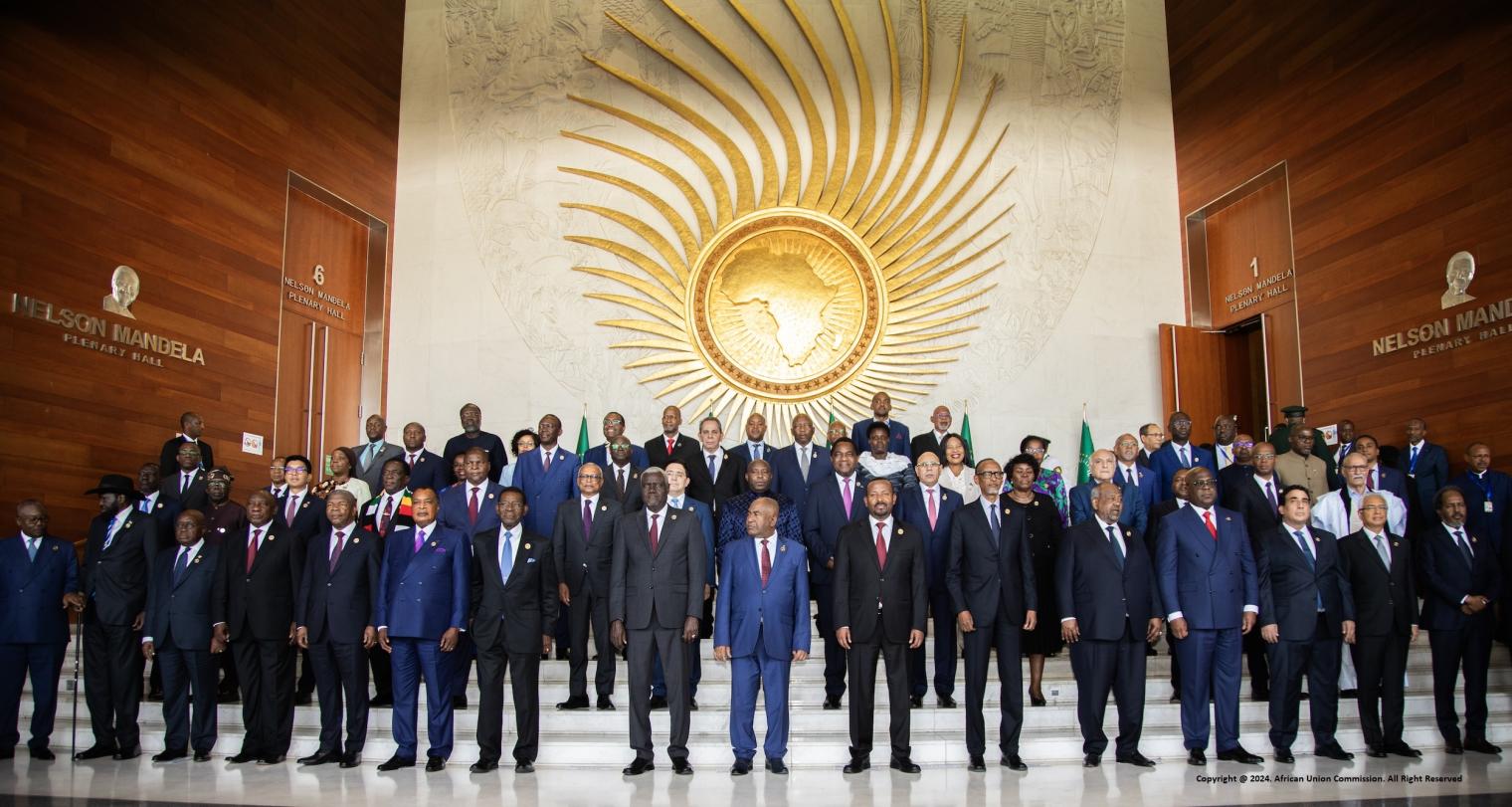
image: 37th Ordinary Session of the AU Assembly (Heads of State and Government Session) | African Union.
The African Union (AU) has officially designated 2025 as the “Year of Justice for Africans and People of African Descent through Reparations.”1 A ruling that sounds administrative, almost innocuous, yet it carries with it centuries of displacement, silence, and dispossession. The decision was made during the 37th Ordinary Assembly of the AU in February 2023, following a proposal put forward at the Accra Conference on Reparations that same year. On paper, a resolution. In reality, a fracture was finally acknowledged.
Why are we talking about it now, at the beginning of 2026? First, because taking stock of the situation is important. We must ask ourselves what has been accomplished, what has failed, and what is just beginning. Second, and even more firmly, because years do not end with calendars: the African Union has conceived the mobilization as a structured and lasting program, which will not be limited to 2025, but will become part of a broader collective project over time.
What is the AU? What does “repair” mean?
When we refer to the African Union (AU), we must understand that we are talking about the evolution of the Organization of African Unity (OAU), founded in 1963 in Addis Ababa in a context of ongoing decolonization; the AU has therefore been active since 20022, expanding the mandate, tools, and ambitions of the previous organization. Each year, the AU selects and officially promotes a “Theme of the Year,” just as it did for 2025. Each theme is linked to Agenda 2063, the union’s long-term strategy3. While the mechanism is the same, 2025 one is unique because it addresses structural historical injustices, engages the African diaspora, and is explicitly conceived as a starting point, not a conclusion.
Do we still need to dedicate a year to reparations?
The African Union’s (AU) designation of 2025 as the “Year of Justice for Africans and People of African Descent Through Reparations” is not simply a symbolic gesture, but the formalization of an unprecedented political and institutional commitment to restorative justice3. This serves to implement work that would otherwise remain purely conceptual.
The Accra Proclamation on Reparations (2023)5, for example, established the “Committee of Experts on Reparations and an Africa Reparations Fund”, a group of specialists (historians, international lawyers, economists, and human rights experts) tasked with defining the meaning of “reparations” in the African context; reconstructing historical responsibilities related to slavery, colonialism, apartheid, and post-colonial exploitation; and developing common legal and argumentative bases that African states can use in international forums and diplomatic dialogues.
Other initiatives include the Africa Reparations Fund and cooperation with partners such as the Caribbean Community (CARICOM). The underlying idea of the Africa Reparations Fund6 is that reparations should not be limited to direct compensation, but shall also support development, memory, and structural rebalancing projects. Some objectives include funding educational, cultural, and historical research programs; supporting economic projects, such as the rehabilitation of neglected infrastructure – including schools, hospitals, transport networks, or water systems – in areas that were historically shaped by plantation economies or colonial resource extraction.
On the other hand, collaboration with CARICOM (the Caribbean Community) represents one of the most strategic aspects of the AU project. CARICOM is one of the most advanced global bodies on the issue of reparations: in 2013, it adopted a Ten-Point Plan6 for Reparatory Justice, aimed at former European colonial states. Theoretically, this collaboration allows us to recognize that the consequences of the African diaspora do not stop at the continent’s borders. In practice, we must also consider that in international conferences such as the United Nations Permanent Forum on People of African Descent7, the AU and CARICOM have developed joint documents outlining common positions on reparations, historical memory education, and cultural policies.
In essence, a dedicated year acts as a catalyst. It structures the debate, mobilizes resources, and launches concrete mechanisms that might otherwise languish. Without such a focal point, the risk is that reparations will remain a conceptual ideal rather than a transformative and actionable program.
Has 2025 really fixed anything?
In the same spirit, we can state that 2025 has not “fixed” the legacy of historical injustices, but it has set in motion institutional practices, dialogues, and collaborative efforts that constitute real strategic progress.
The Pan-African Parliament (PAP)9 has taken on an active legislative and advocacy role within the 2025 theme. In February and July 2025, the PAP convened sessions of its standing committees and ordinary sessions specifically to promote justice and reparations, bringing together parliamentarians, African Union officials, diplomats, and civil society actors to articulate unified positions and promote legislative frameworks and policy integration on restorative justice.
Positive outcomes come from Ghana, where the Ministry of Culture and Creative Arts10 has initiated pilot projects documenting slavery-era sites and funding local museums and historical archives, helping to preserve memory and educate new generations. Also, in countries like Kenya and Senegal, NGOs and youth organizations have organized workshops and community forums to discuss reparations and their historical accountability11. The aforementioned Africa Reparations Fund has begun piloting infrastructure and cultural projects, such as the rehabilitation of historical sites in Cape Coast (Ghana) and Lamu (Kenya), as well as funding educational scholarships in formerly marginalized communities12.
Every project presents challenges and shortcomings, so we’ll highlight some of them. For example, the reparations mechanisms envisaged in the 2025 theme have not led to large-scale financial compensation for historically exploited regions (such as the Copperbelt in Zambia or former plantation zones in Senegal), which face structural poverty and infrastructure deficits12. Furthermore, while some countries have actively participated in 2025 programs, others, particularly in Central Africa13, have lagged due to limited administrative capacity, lack of funding, or political instability. This can only create disparities and imbalances between those who actually benefit from the aforementioned initiatives and those who do not.
Beyond the past year: how can we move towards 2026?
Looking ahead, 2026 and beyond should not be seen as a clean slate, but as a continuation and expansion of the initiatives launched in 2025. The progress made – through the Africa Reparations Fund, the Committee of Experts on Reparations, and partnerships with CARICOM – provides a concrete institutional foundation that can now be expanded, deepened, and made more inclusive.
Projects that have worked and are working in Ghana or Kenya can be adapted to other countries, while considering structural and more subtle differences. There are concrete projects planned for 202615: not just isolated events, but a structured, long-term program that aims to institutionalize, monitor, and implement large-scale remediation policies through the Decade 2026–2036 and related initiatives in AU bodies and among Member States and international partners.
Conclusions
Finally, the importance to center the attention on a long-term strategy may seem like the beginning (or continuation) of a tighter collaboration between institutions across the AU. In promoting reparative justice, the countries involved are actively shaping a new narrative detaching from the colonial rhetoric, and the outcomes are seemingly aligning with the forecasts.
- AU THEME OF THE YEAR 2025. (2025, February 15). African Union. https://au.int/en/theme/2025 ↩︎
- About the African Union. (n.d.). African Union. https://au.int/en/overview?utm_ ↩︎
- Agenda 2063: The Africa We Want. (n.d.). African Union. https://au.int/en/agenda2063/overview?utm_source ↩︎
- AU Theme of the year 2025. (n.d.). Union Africaine. https://www.unionafricaine.be/au-theme-of-the-year-2025/?utm_ ↩︎
- Accra Proclamation on Reparations. (2023, November 14). African Union. https://au.int/sw/decisions/accra-proclamation-reparations?utm_ ↩︎
- AU Theme of the year 2025. (n.d.). Union Africaine, op. cit. ↩︎
- 10-Point Reparation Plan. (2023, April 7). Caribbean Reparations Commission. https://caricomreparations.org/caricom/caricoms-10-point-reparation-plan/?utm_ ↩︎
- Office of the High Commissioner for Human Rights. (n.d.). Permanent Forum on People of African Descent. United Nations. https://www.ohchr.org/en/permanent-forum-people-african-descent ↩︎
- Home. (2025, December 15). Pan-African Parliament. https://pap.au.int/en ↩︎
- Ghana drafts new comprehensive cultural policy thanks to UNESCO IFCD support. (2025, October 13). Diversity of Cultural Expressions. https://www.unesco.org/creativity/en/articles/ghana-drafts-new-comprehensive-cultural-policy-thanks-unesco-ifcd-support ↩︎
- ECOSOCC hosts CSO pre-Summit Symposium on the 2025 African Union Theme of the Year. (2025, February 12). African Union ECOSOCC. https://ecosocc.au.int/en/news/press-releases/2025-02-12/ecosocc-hosts-cso-pre-summit-symposium-2025-african-union-theme-ye?utm_ ↩︎
- African Union. (2025, August 12). African Union Declares 2025 the “Year of Reparations and African Heritage” and Launches Decade-Long Action Plan. PR Newswire. https://www.prnewswire.com/news-releases/african-union-declares-2025-the-year-of-reparations-and-african-heritage-and-launches-decade-long-action-plan-302527653.html?utm_ ↩︎
- Wolkenhauer, A. (2022). The Colonial Legacies of Copper Dependence: Inequality and bifurcated social protection in Zambia. In Global dynamics of social policy (pp. 119–130). https://doi.org/10.1007/978-3-030-86645-7_10 ↩︎
- Simoncelli, M. (2025, February 17). Africa: summit Ua, tra giustizia riparativa e rilancio dell’Agenda 2063 – Africa e Affari. Africa e Affari. https://www.africaeaffari.it/africa-summit-ua-tra-giustizia-riparativa-e-rilancio-dellagenda-2063/?utm_ ↩︎
- RESOLUTION ON THE AFRICAN COMMISSION’S CONTRIBUTION TO IMPLEMENTING THE AFRICAN UNION THEME OF THE YEAR 2025: “JUSTICE FOR AFRICANS AND PEOPLE OF AFRICAN DESCENT THROUGH REPARATIONS” – ACHPR/Res 653.(EXT.OS/XXXIX) 2025. (2026, January 16). African Commission on Human and Peoples’ Rights. https://achpr.au.int/en/adopted-resolutions/653-achprres-653extosxxxix-2025?utm_ ↩︎