

Written by

Arianna Martinella graduated in Political Science, International Relations, and Human Rights and she is currently pursuing a master’s degree in International Relations. She mainly writes about geopolitics and human rights.

Master’s student in International Relations with training in International Relations for Marketing and Political Science. She writes about politics and society with an analytical and interdisciplinary approach, with research interests ranging from human rights to political communication.
Edited by Fall Sokhna
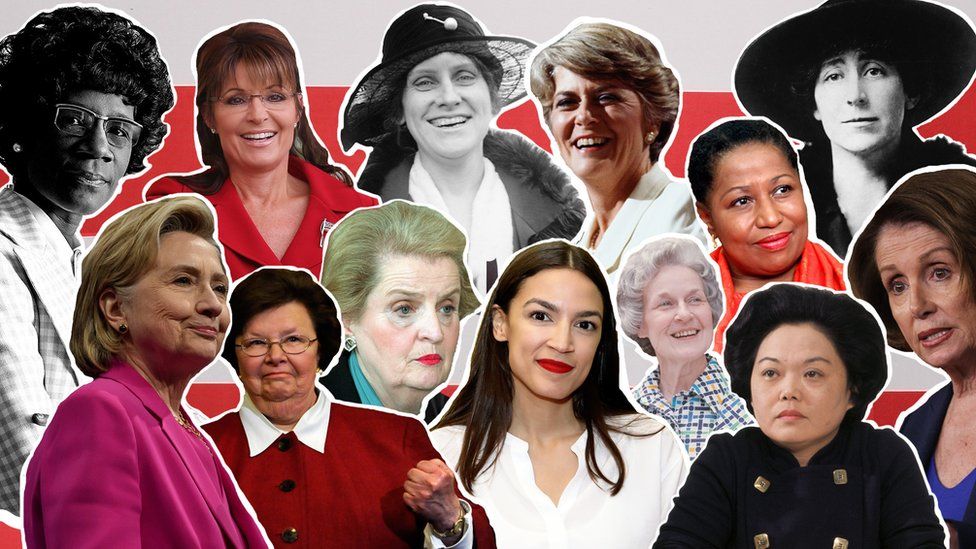
Cover image. Credits to institute for youth in policy “nasty women: the double standards of being a woman in politics”, Marielle DeVos, 21 June 2021
In Western countries, we are accustomed to studying the distribution of political power as historically dominated by men, as the sole participants in public life. However, this doesn’t imply that women were not part of the equation; they were hidden, as is the case with matriarchal societies, unmentioned, or mentioned along with a male name.
“Behind every great leader, there is his wife.”
The Greeks, Romans, and other prominent populations of the past had powerful women to substitute underage or underdeveloped men through marriage or motherhood, as was the case with Cleopatra (69 AD – 10 DC)1, who reigned in place of his younger brother.
Over the centuries, women have played an increasingly central role. Joan of Arc (1412-1431)2 is the ultimate emblem of medieval France, due to her role in securing the coronation of King Charles VII and her martyrdom by being burnt at the stake for heresy.
In fact, the female experience in politics grew substantially within monarchies, where wealthy white women of the Western world had the resources and opportunities to study and develop an interest in such issues. For instance, Queen Margaret I of Denmark (1353-1412)3, who united Scandinavian countries for over a century, the conservative Queen Isabella I of Spain (1451-1504)4 or Queen Elisabeth I Tudor (1533-1603)5 and the “golden age” of the United Kingdom which was renamed after her. Furthermore, Queen Kristina of Sweden (1626-1689)6 shocked everyone by abdicating and dedicating the rest of her life to art and culture; Empress Catherine of Russia (1729-1796)7 westernized the society and is still recognized as the longest-reigning woman in the country. The role of women in monarchy was extraordinarily significant, considering the societies of their time, which did not recognize women’s place in civilization. For this reason, noblewomen still had more opportunities than commoners to change the world around them.
The paradigm shifted on September 19th, 1893, when the Governor Lord Glasgow signed a new Electoral Act8 into law, thereby establishing New Zealand as the first country in the world to grant women the right to vote in parliamentary elections. Despite a series of significant victories in politics, it was not until 1997 that a woman became Prime Minister, Jenny Shipley (1952-)9. Since she came to power after a coup against her predecessor, the better remembered is Helen Clark (1950-)10, who became the first one to be elected and succeeded her from 1999 to 2008, winning three elections.
While the feminist movement celebrated this significant achievement, the rest of the world had to wait until World War I to gain something. The Soviet Union is a salient example in this regard, though it is often overlooked. Female participation in Lenin’s project11 was an extraordinary proof of equality, and we remember here in particular Alexandra Kollontaj (1872-1952)12, who was the world’s first woman ambassador, representing Russia abroad from 1923 until 1945.
During the two world wars, several countries granted women the right to vote as a gesture of gratitude for their immense contribution to the war effort, and by the 1950s, almost all developed nations worldwide had reached this milestone.
After World War II, Eleanor Roosevelt’s (1884-1962)13 role as a humanitarian and diplomat is noteworthy, particularly in drafting the United Nations’ Universal Declaration of Human Rights. Also, what is now known as the Global South began to step forward. In Ceylon (later known as Sri Lanka), Sirimavo Bandaranaike (1916-2000)14 was elected in July 1960, becoming the world’s first female Prime Minister. In the same period, India chose Indira Gandhi (1917-1984)15 to serve as Prime Minister for four terms. She is remembered for leading the creation of Bangladesh and setting the country on a path toward global prominence.
Argentina had the world’s first woman president (not elected) in 1974 with Isabel Perón (1931-)16. The government under her leadership was characterized by instability and escalating levels of violence, for which she was accused of perpetrating human rights atrocities. Following a military coup in 1976, she was overthrown, arrested, and subsequently exiled to Spain.
It was not until two decades later that civil society witnessed the world’s first female head of state, when Vigdis Finnbogadottir (1930-)17 was elected President of Iceland and served in the role from 1980 to 1996. Indeed, the island is renowned for its forward-thinking politics, particularly concerning gender equality, which is among the highest in the world. Despite the presence of a female Head of State, Prime Minister, Foreign Minister, Minister of Justice, bishop, National Commissioner of Police, Director of Health, speaker of Parliament, mayor of the capital and rector of the national university, the path is ongoing18.
Among the most successful countries in terms of gender equality, in 1919 Ireland appointed the first female Minister in Europe, Countess Constance Markievicz19, and in 1977-78 the first female Parliamentary Secretary and the first female Minister of State, Maire Geoghegan-Quinn20. The Irish population also elected its first female President in 1990, Mary Robinson (1944-)21. Her successor was another woman, Mary McAleese (1951-)22 until 2011, and the last presidential election, held in October 2025, was a lesson to the world, with only two female candidates running and the appointment of their third female head of state, Catherine Connolly (1957-)23.
Indeed, despite the existence of a number of commendable benchmarks, the underrepresentation of women in high-ranking positions on a global scale remains an ongoing issue. As of 2025, only 25 of these positions were held by women, constituting a mere 22.9% of the cabinet ministers. Notably, these women continue to be predominantly assigned to portfolios that are often associated with traditional stereotypes24.
Electoral perception of female leaders
Research on gendered backlash indicates that, within patriarchal contexts, both Western and non-Western, elections are subject to a double standard when it comes to female candidates25. Female leaders are often subjected to the stereotype of “soft femininity” as a result of their physical appearance and emotional expression. In order to garner electoral respect, women in politics must compensate for their perceived “fragility” by embracing “masculine” traits26 such as unwavering determination: hence the rise of iron ladies.
The term was first used by the Soviet press in reference to Margaret Thatcher (1925-2013), who became the first female Prime Minister of the United Kingdom in 1979. Thatcher’s position on communism was unwavering, and she rejected any compromise regarding economic reforms and trade unions. Her slogan, indicative of her stance, was “The lady’s not for turning.”27
In reality, Thatcher was not the first Iron Lady: before her, Golda Meir (1898-1978), Israeli Prime Minister from 1969 to 1974, was described as a “strict woman” with an “iron will,”28 stubborn on territorial issues and Arab conflicts29, embodying an “unbridled political animal.” According to a recurring joke, Israelis used to call her “the only real man in Israel,” and even David Ben Gurion, former Israeli Prime Minister, used to refer to her as “the best man in government.” Despite this reputation, towards the end of her career, she managed to maintain a maternal aura, which made her appear as “the grandmother of the Israeli people.”30
Nevertheless, Thatcher led the way. Angela Merkel (1954-) was also initially compared to her. Later on, she became the “mother of the nation,” a title bestowed upon her for her 16-year tenure as Germany’s first female chancellor and second – to Thatcher indeed – woman to lead the G8. The eurozone crisis31 compelled her to make challenging decisions, which she successfully persuaded Europe to adopt through her remarkable determination and strategic thinking.32 Her “Teutonic patience” is well-known, contrasting with the fatigue exhibited by her colleagues during European Union summits, and enabling her to impose Germany’s austerity measures. She emerged as a survivor of protracted negotiations33, which spanned up to 17 hours, akin to the Minsk 2015 talks, and which she had deliberately prolonged34. The “Merkelian” style of leadership was characterized by its emotional detachment, emphasis on facts, and unwavering persistence. Her physical strength was a reflection of her political rigidity.
Outside the Western world and politics, Ellen Johnson Sirleaf (1938-) served as a Liberian minister from 1979 and became Africa’s first female president from 2006 to 2018. She is known as the “African Iron Lady” for imposing strict priorities: peace, basic services, consistent governance, leading peaceful democratic transitions and anti-gender violence reforms with “laser focus.”35 Her steadfastness rebuilt credibility in a devastated country and won her the Nobel Peace Prize in 2011.
To date, there are three new “iron ladies” in the world: Italy’s first female prime minister Giorgia Meloni (1977-), Japan’s prime minister Sanae Takaichi (1961-), and Kosovo’s president Vjosa Osmani (1982-).
Meloni adopts a traditional framing (“woman, mother, Italian”)36 but with an assertive style, challenging male elites in a post-fascist party37; her rise reflects rigidity against gendered scrutiny of her appearance and gestures, gaining legitimacy as “man of the year” in conservative newspapers.
In Japan, Takaichi is considered the “Iron Lady” for her hawkish positions on Taiwan, China, and defense38, explicitly inspired by Thatcher39; her nationalist ultra-conservatism wins her support among conservatives40, countering stereotypes with controversial but respected readiness.
Finally, Kosovar President Osmani embodies “disciplined and principled leadership,” defending the constitution and rule of law against corrupt elites, earning US-EU respect for her firm stance on sovereignty and minorities without provocation. Her credibility stems from assertive risk-taking in high-consensus elections.41
Of course, not all female leaders have ruled with an iron fist, as evidenced by Jacinda Ardern (1980-) in New Zealand. However, it is interesting to note this tendency toward determination when women enter political careers, as if they have to prove that they can govern and overcome that “feminine softness” in order to earn the respect of a nation. Similarly, in many cases, we see these women softening at the end of their careers, as in the cases of Golda Meir and Angela Merkel.
Recent female leaders
Wonderful news has to be reported from the African country while talking about female political leadership. Democratic Republic of the Congo’s President Felix Tshisekedi has appointed the country’s first female Prime Minister, in the name of economist Judith Suminwa Tuluka (1967). Taking into consideration the ongoing (and worsening) humanitarian crisis, this step is of particular importance and is said to be concentrated on employment, youth, women and national cohesion.
Latin America came to the news recently with two strong examples. Peru elected its first woman president in December 2022 when former President Pedro Castillo was removed from office and was replaced by his vice-President Dina Boluarte (1962)42. However, following corruption and scandals allegations, she was impeached on 10 October 2025 on the ground of “permanent moral incapacity”. The president of the Congress, Josè Jeri, succeeded her.43 Claudia Sheinbaum (1962)44 is the first woman (and Jewish) elected as President of Mexico. Beside her activity as environmental engineer, she is also known for her scientific research and advocacy towards energy efficiency, sustainability and environment and she is one of the scientists and policymakers who shared the 2007 Nobel prize for peace for their work on the Intergovernmental panel on climate change IPCC.
Despite recent democratic backlash, the United States of America had their first woman, first Black American and first Asian American vice-President during the administration of former President Joe Biden, in the person of Kamala Harris (1964)45. She casted the most tie-breaking votes in history, shattering a nearly 200-years-old record and became an advocate for reproductive rights, which were significantly limited in many states.46
Conclusion
From Cleopatra to Kamala Harris, the trajectory of female political leadership is neither linear nor complete. It is marked by ruptures, symbolic breakthroughs, setbacks, and strategic adaptations to systems historically designed to exclude women from power. If monarchies once offered rare and exceptional spaces for female authority, modern democracies have turned representation into a measurable – and therefore judgeable – political benchmark.
Yet numbers alone are not enough. The persistence of gendered backlash, the expectation that women must embody “iron” traits to be considered competent, and the relegation to stereotypically “soft” portfolios reveal that formal access does not automatically translate into substantive equality. The rise of so-called “Iron Ladies,” from Margaret Thatcher to Angela Merkel, reflects not only individual determination but also the structural pressure placed upon women to perform strength in a language historically coded as masculine.
At the same time, alternative leadership models – more empathetic, collaborative, and socially oriented – challenge the assumption that authority must be rigid to be effective. The diversity of styles displayed by contemporary leaders across continents suggests that the real transformation is not simply the presence of women in office, but the gradual redefinition of what leadership itself can look like.
The path forward remains uneven. Political participation is expanding, but resistance persists. Representation is growing, but power structures evolve slowly. The history of female leaders is therefore not just a chronology of “firsts,” but an ongoing negotiation between gender, legitimacy, and authority.
The question is no longer whether women can lead. History has answered that decisively. The real question for the future is whether political systems are ready to move beyond exceptionalism and normalize women’s leadership as an integral, unquestioned part of democratic life.
- Britannica, Cleopatra, https://www.britannica.com/biography/Cleopatra-queen-of-Egypt ↩︎
- Britannica, Joan of Arc, https://www.britannica.com/biography/Saint-Joan-of-Arc ↩︎
- Britannica, Queen Margaret I of Denmark, https://www.britannica.com/biography/Margaret-I ↩︎
- Britannica, Queen Isabella I of Spain, https://www.britannica.com/biography/Isabella-I-queen-of-Spain ↩︎
- Britannica, Queen Elisabeth I, https://www.royal.uk/elizabeth-i ↩︎
- Britannica, Queen Kristina of Sweden, https://www.britannica.com/biography/Christina-queen-of-Sweden ↩︎
- Britannica, Catherine the Great, https://www.britannica.com/biography/Catherine-the-Great ↩︎
- New Zealand history, women and the right to vote, https://nzhistory.govt.nz/politics/womens-suffrage ↩︎
- New Zealand history, Mary Shipley, https://nzhistory.govt.nz/people/jenny-shipley ↩︎
- New Zealand history, Helen Clark, https://nzhistory.govt.nz/people/helen-clark ↩︎
- Marx Memorial Library, women in the Russian Revolution, https://www.marx-memorial-library.org.uk/project/centenary-russian-revolution/women-russian-revolution ↩︎
- Britannica, Alexandra Mikhaylovna Kollontaj, https://www.britannica.com/biography/Aleksandra-Mikhaylovna-Kollontay ↩︎
- Britannica, Eleanor Roosevelt, https://www.britannica.com/biography/Eleanor-Roosevelt ↩︎
- Britannica, Sirimavo Bandaranaike, 12 February 2026, https://www.britannica.com/biography/Sirimavo-Bandaranaike ↩︎
- Britannica, Sirimavo Bandaranaike, https://www.britannica.com/biography/Indira-Gandhi ↩︎
- Britannica, Isabel Peron, https://www.britannica.com/biography/Isabel-Peron ↩︎
- Britannica, Vigdis Finnbogadottir, https://www.britannica.com/biography/Vigdis-Finnbogadottir ↩︎
- Inspired by Iceland, Iceland’s equality story, https://www.inspiredbyiceland.com/society/timeline ↩︎
- Britannica, Constance Markievicz, https://www.britannica.com/biography/Constance-Markievicz ↩︎
- Women in politics, Maire Geoghan-Quinn, https://www.mna100.ie/Cabinet_Ministers/MAIRE_GEOGHEGAN_QUINN.html ↩︎
- Britannica, Mary Robinson, https://www.britannica.com/biography/Mary-Robinson ↩︎
- President of Ireland, Mary McAleese, https://president.ie/en/the-president/mary-mcaleese ↩︎
- President of Ireland, Catherine Connolly, https://president.ie/en/the-president/catherine-connolly ↩︎
- UNwomen, women political leaders 2025, 1 January 2025, https://www.unwomen.org/sites/default/files/2025-06/poster-women-political-leaders-2025-en.pdf ↩︎
- Nai, Valli, Maier, Aaldering, “Gendered Backlash Depends on the Context. Reassessing Negative Campaigning Sanctions Against Female Candidates via Large-Scale Comparative Data”, Political Communication, Vol. 42, 2025, https://doi.org/10.1080/10584609.2024.2434930. ↩︎
- Breyer M., “Backlash or Progressive Mobilization? Voter Reactions to Perceived Trajectories of Women’s Representation”, Comparative Political Studies, Vol. 57, No. 13, 2024, https://doi.org/10.1177/00104140231223745. ↩︎
- Cfr. Pinnacle Potential, “The Iron Lady: Margaret Thatcher’s Charisma and Influence”, https://richard-reid.com/the-iron-lady-margaret-thatchers-charisma-and-influence/, visited on Feb 25th, 2026. ↩︎
- Feinstein S.C. (2023), “Golda Meir”, EBSCO, https://www.ebsco.com/research-starters/history/golda-meir, visited on Feb 28th, 2026. ↩︎
- Kaplan E. (2023), “50 years later, one thing is clear: Golda Meir was a bad prime minister”, The Jewish News of North Carolina, https://jweekly.com/2023/10/05/50-years-later-one-thing-is-clear-golda-meir-was-a-bad-prime-minister/#:~:text=Golda%E2%80%99s%20dismissive%20attitude%20toward%20the%20Arab%20world, visited on Feb 28th, 2026. ↩︎
- Kordova S. (2008), “Mother of a nation, but not much of a mother”, Haaretz, https://web.archive.org/web/20100413073741/http://www.haaretz.com/hasen/spages/998369.html, visited on Feb 28th, 2026. ↩︎
- Timoshenkova E.P., “Angela Merkel’s Leadership Lessons: the Secret of Political Longevity (2013‒2021)”, Her Russ Acad Sci., Vol. 92, No. 2, 2022, doi: 10.1134/S1019331622080111. ↩︎
- Bruen B. (2018), “Angela Merkel’s Legacy and the Next Generation of Women Leaders”, U.S. News, https://www.usnews.com/news/best-countries/articles/2018-01-24/angela-merkels-legacy-and-the-next-generation-of-women-leaders, visited on Feb 25th, 2026. ↩︎
- Duff A. (2022), “L’esprit de l’escalier of Angela Merkel: Her Last European Council”, Brexit Institute News, https://dcubrexitinstitute.eu/2021/10/merkel-last-european-council/#:~:text=her%20107th%20and%20last%20meeting, visited on Feb 25th, 2026. ↩︎
- Spiegel (2012), “EU Summit Reveals a Paralyzed Continent”, https://www.spiegel.de/international/europe/eu-summit-reveals-a-paralyzed-continent-a-874359.html, visited on Feb 25th, 2026. ↩︎
- Council of Women World Leaders (2021), “Ellen Johnson Sirleaf: Restoring Peace and Protecting Lives in Post-War Liberia”, https://www.councilwomenworldleaders.org/news/what-happens-when-women-lead-ellen-johnson-sirleaf, visited on Feb 28th, 2026. ↩︎
- Montecchio L. and Griffini M., “Giorgia Meloni’s ambiguity on gender rights”, The Loop, https://theloop.ecpr.eu/giorgia-melonis-ambiguity-on-gender-rights/#:~:text=’a%20woman%20and%20a%20mother‘, visited on Feb 28th, 2026. ↩︎
- Vikraman Nair N. (2025), “Giorgia Meloni: Power, perception and the politics of gender”, Geojuristoday, https://www.geojuristoday.in/post/giorgia-meloni-power-perception-and-the-politics-of-gender#:~:text=roots%20in%20Italy%E2%80%99s%20post%20fascist%20politics, visited on Feb 28th, 2026. ↩︎
- Mochizuki M. (2025), “First female Japan PM takes hawkish position on China, Taiwan”, Responsible Statecraft, https://responsiblestatecraft.org/sanae-takaichi-japan/#:~:text=China%20imposed%20a%20maritime%20blockade%20on%20Taiwan, visited on Feb 28th, 2026. ↩︎
- Yeung T. (2025), “Meet Japan’s drum-playing, Thatcher-loving first female prime minister”, BBC News, https://www.bbc.com/news/articles/crkj5e73xkmo, visited on Feb 28th, 2026. ↩︎
- Shirō S. (2025), “Takaichi Sanae Takes the Helm: Charting a Conservative Course Along Abe Lines”, Nippon.com, https://www.nippon.com/en/in-depth/d01178/, visited on Feb 28th, 2026. ↩︎
- Shkreli F., “President Vjosa Osmani and the Strategic Value of Continuity in U.S.–Kosovo and EU–Kosovo Relations”, Gazeta Nacional Albania, https://gazeta-nacional.com/president-vjosa-osmani-and-the-strategic-value-of-continuity-in-u-s-kosovo-and-eu-kosovo-relations/amp/, visited on Feb 28th, 2026. ↩︎
- Britannica, Dina Boluarte, https://www.britannica.com/biography/Dina-Boluarte ↩︎
- The New York Times, “Peru shows how democracies die even without a dictator”, Will Freeman, 24 October 2025, https://www.nytimes.com/2025/10/24/opinion/peru-dictator-democracy-boluarte.html ↩︎
- Britannica, Claudia Sheinbaum, https://www.britannica.com/biography/Claudia-Sheinbaum ↩︎
- Britannica, Kamala Harris, https://www.britannica.com/biography/Kamala-Harris ↩︎
- Supreme Court of the United States, Dobbs v. Jackson, https://www.supremecourt.gov/opinions/21pdf/19-1392_6j37.pdf ↩︎