

Edited by Andrea Corinaldesi
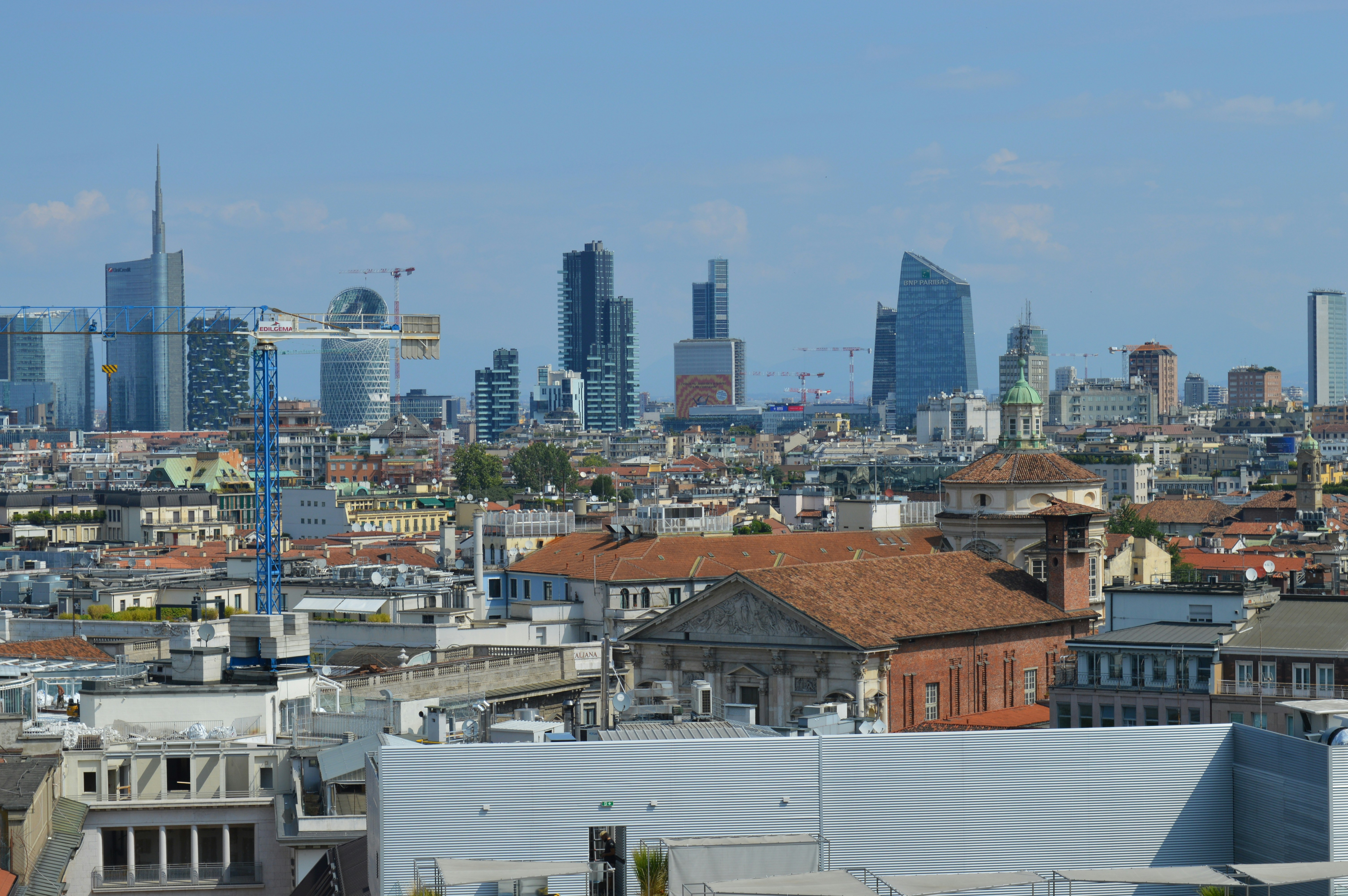
Cover image. https://unsplash.com/it/foto/milano-lo-skyline-ditalia-e-visibile-in-una-giornata-luminosa-TzckjkOGwps
Introduction
Urban marginality and neighbourhood dynamics have long been central themes in sociological research, especially when analysing how spatial environments shape social behaviour.
For decades, the dominant paradigm for understanding these phenomena was provided by the Chicago School of Sociology and its Social Disorganization Theory. Developed in the early 20th century, this framework established a direct, often deterministic link between structural conditions, such as economic disadvantage, ethnic heterogeneity, and high residential mobility, and the breakdown of social control, leading to crime and urban decay. While this ecological approach offered valuable tools for mapping city growth, it frequently overlooked the internal resources, resilience, and active agency of the individuals inhabiting those spaces. This paper critically engages with the legacy of the Chicago School by testing its classic paradigms against a contemporary European case study: the San Siro neighbourhood in Milan. Specifically focusing on the public housing district known as the “quadrilatero”, this study investigates whether an area characterized by severe socio-economic disadvantage must inevitably succumb to social disorganization, or if alternative forms of social organization can emerge from within.
To guide this analysis, the paper is structured into three main chapters:
The first chapter establishes the theoretical foundation of the paper by exploring the origins of the Social Disorganization Theory and its primary indicators: heterogeneity, poverty, and residential mobility. It then applies these criteria directly to the case of San Siro, using the recent ISTAT data and the Socio-Economic Disadvantage Index (IDISE). This section illustrates how the neighbourhood’s high percentage of foreign residents, low-income households, and precarious population turnover align with the classic conditions of urban hardship outlined by Clifford Shaw and Henry McKay.
Through the second chapter, the analysis moves to the spatial and physical dimensions of the neighbourhood. Drawing on Ernest Burgess’s Concentric Zone Model, this chapter evaluates San Siro’s structural role as a “transition zone” within Milan, marked by stark economic and ethnic segregation.
The final chapter addresses the theoretical gaps of the Chicago School, specifically its tendency toward logical circularity and the ecological fallacy. Shifting the focus to Sampson’s theory of Collective Efficacy, this section explores how diversity can breed solidarity rather than chaos. This chapter demonstrates how residents can transform a space of vulnerability into a site of collective agency.
1. The Chicago School Theory
The Social Disorganization Theory was developed by researchers from the University of Chicago during the 1920s and 1930s. The theory focuses on how neighbourhood dynamics and environmental conditions influence human behaviour through a social ecology approach. It was originally formulated as a sociological explanation for why certain urban areas experience higher crime rates than others. Rather than attributing deviance to individual moral failure, the theory argues that crime emerges from the breakdown of social structures, weakened community ties, and the inability of local institutions to maintain social order.
At the centre of the theory is the idea that communities characterised by weak informal social control are more likely to experience crime and disorder. Informal social control refers to the capacity of families, schools, neighbours, and community organisations to regulate behaviour and promote shared social values. When these institutions are fragile or ineffective, residents become less able to collectively prevent deviant behaviour and maintain social cohesion. According to the theory, the main causes of social disorganization include residential instability, poverty, ethnic heterogeneity, family disruption, unemployment, and rapid population turnover.
The theory stems from a period in which Chicago and many other American cities were growing rapidly due to industrialization and consequent massive migration flows. “Sociology was born of the modern ardor to improve society”1 and faced with a city that, for the first time, was experiencing crime in its poor neighbourhoods, a massive influx of foreign residents, ghettoization, and rapid economic growth, the scholars Clifford Shaw and Henry McKay decided to do just that: use sociology to study these new phenomena and analyse them, to advance and understand society. They played a fundamental role in developing the theory.
Through empirical studies of juvenile delinquency in Chicago, they discovered that crime rates remained consistently high in certain neighbourhoods over time, even when the ethnic composition of those areas changed. This finding suggested that crime was linked more to environmental and structural conditions than to the characteristics of ethnic or cultural groups. Their work introduced innovative methods such as crime mapping and urban ecological analysis, which became highly influential in criminology and urban sociology.
1.1 Heterogeneity, Poverty and Residential Mobility in San Siro
Based on the dimensions of heterogeneity, poverty, and residential mobility, analysed by researchers at the Chicago School, it is possible to reconstruct the identity of Milan’s San Siro neighborhood as one which alternates between a luxurious area, featuring large apartment buildings with swimming pools, villas, and soccer players’ homes, and the so-called “quadrilatero”,2 or the four streets that form the heart of the area of interest for this paper.
It is the youngest neighbourhood in Milan, with a percentage of the population in the 0-18 bracket that is much higher than the Milanese average,3 and it is also one of the most ethnically diverse neighbourhoods, with the main ethnic groups including Egyptians, Moroccans, Filipinos, Peruvians, Romanians and Sri Lankans.4
The first factor emerges: this is definitely a neighbourhood characterised by heterogeneity. The groups that make up the community differ in terms of their origins, ages, experiences and outlook for the future. A large proportion are foreigners who have arrived over the past twenty years, and within this group there is a distinction between those from more favourable backgrounds or circumstances and those with a very difficult and complex background.
Then there are the Italians, mostly people from the working class of the 20th century, who have lived in the neighbourhood for many years and are now elderly and frail. They tend to live with a younger family member or an adult from outside the family who can look after or assist them.5 A situation of coexistence arises between the elderly and migrants, and at the same time between migrants of different ethnic backgrounds, who tend to form cultural enclaves that interact little with one another, even though they are part of the same environment. ISTAT has created the Index of Socio-Economic Disadvantage for Individuals and Households at the sub-municipal level (IDISE) to measure the “Condition in which individuals experience difficulty adequately meeting their basic needs due to a lack or insufficiency of social, economic, employment, and educational resources and opportunities”. It6 was constructed by combining nine indicators, including the employment rate (ages 25–64), the foreign population, individuals with unstable employment (ages 25–64), individuals in households with low equivalent income, and individuals in households with no employed members or recipients of occupational pensions. Social and economic hardship increases as the index rises, and an area is considered to have above-average hardship (set at 100) if its index exceeds 100: the San Siro area under examination has a socio-economic hardship index of 104.1, which is above average. Higher scores are found in the Quarto Oggiaro (104.2) and Ponte Lambro (104.8) areas. A second correlation with the Chicago School theory can be observed: San Siro is an area characterized by economic disadvantage, a situation marked by poverty, unemployment, low wages, and inequality.
Residential mobility refers to the relocation of individuals or households from one place of residence to another. It includes changes in living arrangements, housing conditions and affordability, as well as shifts in the spatial organization of everyday life. There is very little internal mobility within the neighbourhood when it comes to upgrading housing. In most cases, the first home people are assigned in the neighbourhood remains their home throughout their entire stay, even as their needs change and their household grows. There is low mobility in and out of the social housing stock, because the procedure for obtaining council housing requires7 possession of a certificated digital identity8 and an electronic identity card, official residence, and employment within the region for a set number of years; requirements that few foreigners have the luxury of meeting in a short time. Residential mobility in San Siro is also linked to other phenomena, such as the transient population, who are generally hosted by members of their cultural enclave of origin whilst awaiting the completion of their migration process, the acquisition of documents, or finding work. It is also worth mentioning Italian citizens who cannot afford rents in the city centre and manage to find accommodation in the area, creating a flow from central areas to more outlying ones, where rents are more affordable. Residential mobility primarily affects those living in housing illegality, who are in a state of constant turnover and unstable situations. These are problematic situations caused by migratory movements, and are therefore influenced by international crises, severe repression by totalitarian regimes, and ongoing wars.
In conclusion, another common feature can be found between San Siro and Social Disorganisation Theory: residential mobility, which in the case of this neighbourhood primarily affects that section of the population who have arrived in the neighbourhood more recently, in a mobile and precarious situation, both in terms of employment and prospects. High levels of people moving in and out of a neighbourhood lower the neighbourhood’s ability to regulate itself, reducing the possibility of creating permanent relations and dynamics. Residential mobility and heterogeneity create a mix of different ethnic backgrounds, and the only possible outcome, according to the theory, is a situation of low trust, high cultural and language barriers, inhibiting the ability of residents to live together.
2. San Siro as a “transition zone” according to Burgess
Ernest Burgess was an urban sociologist and one of the pioneers of the Chicago School. He theorized the Concentric Zone Model trying to explain that deviance is a structural phenomenon, not a function related to the traits of any ethnic or social groups. To demonstrate his theory, he used the city of Chicago as a model, dividing it into concentric zones, each with specific traits and characteristics. This led to the classification of six zones: the Central Business District (CBD), the Factory Zone, the Transition Zone, the Working Class Zone, the Residential Zone and the Commuter Zone. Of particular interest to the research is the Transition Zone, an area that welcomes new groups of immigrants, characterised by deteriorating housing, factories and abandoned buildings.9 The zone is characterised by high rates of social disorganisation and dysfunction, largely due to social breakdown and discrimination in the rest of the city.
Burgess’s theory has been heavily criticised, both because there is a significant gap between this model and the geography of many cities, and because there is no ideal pattern in the structure of cities. This renders the model debatable; however, as it is highly useful for the purposes of this paper, the geographical dimension will not be considered, to allow the distinctive characteristics of the area to take centre stage.
Resuming the main points of the theory, the characteristics of the Transition Zone are mostly low-income residents, who cannot afford to move to different areas, high rates of immigrants attracted by low rentals, and racial and ethnic, as well as economic, segregation.
Returning to the ISTAT data, previously cited regarding Social Disadvantage, which date back to 2021, the category “Individuals in households with low equivalent income” is of particular interest, as it shows that San Siro is home to the city’s poorest population, with a score of 29.5.10 Meanwhile, areas such as Duomo, Brera and Isola, which would constitute what Burgess calls the Central Business District, hover around a value of between 17 and 18.5;11 confirming the first characteristic12 of the Transition Zone. To further support the view that the San Siro district fits Burgess’s definition, it is necessary to examine the data on the proportion of the foreign population; the neighbourhood scores 34.8, in stark contrast to Milan’s Central Business District, which scores between 15 and 17.5. According to data collected in 2021 and updated in 2023, the foreign population accounts for 51.2%13 of the neighbourhood’s total population; therefore, the foreign population makes up more than half of the neighbourhood’s population, with a wide variety of nationalities. Once again, a section of the transition zone, specifically, the “high rates of immigrants”, is also found in the San Siro area, consequently, racial, ethnic and economic segregations are observed. In conclusion, the San Siro district fits perfectly within the definition and characteristics of Burgess’s Transition Zone.
3. Limits of the theory
The Chicago School’s Social Disorganisation Theory has undoubtedly been a fundamental and enriching development in sociology, but it has its limitations and shortcomings.
First and foremost, the various studies carried out reveal inconsistencies in measurement, which have led to a lack of harmonisation between the results of different studies and incompatibility between them. By creating, through careful conceptualisation and targeted research, a common set of network measurement tools, it will be possible to address this shortcoming and establish a rigorous community-level data collection system. The aim must be to develop research tools capable of exploring and measuring the widest possible range of community processes, whilst also enriching existing databases.
When discussing “informal control”, each scholar takes various aspects into account; some of these may be used by others, whilst others are absent from other studies. Heterogeneous dimensions are often considered (neighbourly intervention in the event of disturbances, the reduction or expansion of neighbourhood services), highlighting the problem of the impossibility of harmonising the various studies, as these are based on very different categories. A re-evaluation of the factors considered in the various studies and a critical assessment of these would make it possible to narrow the scope of research, resulting in a set of fixed, acceptable indicators for all. The theory suffers from a logical circularity: to explain crime in certain areas of the city, the social and structural disorganisation of those areas is mentioned, yet this disorganisation is in turn measured by the crime rates recorded in the area. For this reason, establishing a set of common dimensions and factors across all studies on the subject would help to avoid this entanglement. There is an ecological fallacy:14 not all individuals living in socially disorganised areas commit crimes or are prone to delinquency.
There is a lack of focus on the individual dimension, family ties, resilience and individual inclinations. A sociological study tends towards generalisation, based on a representative sample, but it is essential to include consideration of individual characteristics. According to the Chicago School theory, heterogeneity means “chaos”; later sociologists would demonstrate how diverse communities with alternative forms of social organisation can emerge from a heterogeneous urban area, as the case study example below. It was Robert Sampson, with his concept of “Collective Efficacy”,15 who shifted the perspective, moving away from focusing solely on what is lacking to analysing residents’ active capacity to build their own neighbourhood, maintaining social control and fostering strong mutual trust.
3.1 Local activism
Unlike the Chicago School model, which is often criticised for its deterministic interpretation of urban marginality, the case of San Siro highlights the active role of local actors in reshaping social relations from below. Within the neighbourhood, several committees, grassroots organisations, and informal associations work to counter processes of exclusion and fragmentation by promoting solidarity networks, mutual aid practices, and forms of civic participation.
These initiatives aim not only to respond to everyday social problems, but also to redefine the identity of the neighbourhood and strengthen community cohesion, as theorized by Sampson. In this sense, San Siro cannot be understood solely as a space shaped by structural inequalities; it is also a site of resistance and collective agency, where residents actively attempt to reorganise social life and reclaim their right to the city. This movement is being put into practice by several organisations with strong local roots. The “Abitanti di San Siro” Committee and “Vivere San Siro” Association work together to defend the right to housing and support families facing housing crises, with the aim of improving the quality of life in the neighbourhood and promoting integration. In the areas of culture and social inclusion, there are, among many others, the “Fenice” Non-Profit Association and “Il Telaio delle Arti” APS, which use culture and community building as tools to tackle the challenges facing outlying areas, offering support to vulnerable people through art therapy and intercultural programmes. Finally, these are complemented by initiatives such as “Work is Progress”, which supports the employment of young people and women to promote social inclusion, and “Mamme a Scuola”, a support and integration initiative aimed primarily at foreign women.
The mosaic of initiatives that brings San Siro to life ultimately paints a picture of a neighbourhood that refuses to be reduced to the stigma of marginalisation. Through housing, culture, work and linguistic inclusion, the local community demonstrates that urban space is not merely a geographical reality to be endured, but a living territory to be explored, redefined and inhabited. In this context, the agency of residents stands out as the most valuable resource: a driving force for cohesion capable of transforming social fragmentation into solidarity and vulnerability into a starting point for demanding a fairer and more inclusive city.
Conclusion
The analysis conducted in this paper answers the starting research question by confirming that the San Siro neighbourhood largely fits both Shaw and McKay’s definition of a “Neighbourhood with High Social Disorganisation” and Burgess’s concept of a “Transition Zone”.
The empirical evidence examined through ISTAT data reveals the presence of the three key indicators identified by the Chicago School: ethnic heterogeneity, economic disadvantage, and residential mobility. These structural conditions place San Siro within the theoretical framework developed by early urban sociologists to explain the concentration of crime and social disorder in specific urban areas. Furthermore, the neighbourhood also reflects several characteristics associated with Burgess’s Transition Zone, including a high concentration of low-income households, a significant presence of immigrant populations, and forms of ethnic and economic segregation.
From those perspectives, San Siro appears to represent a contemporary example of the urban dynamics originally observed in Chicago during the early twentieth century.
However, the case study also highlights important limitations of the Chicago School approach.
While the theory successfully identifies structural vulnerabilities, it tends to overlook the agency of residents and the capacity of communities to develop alternative forms of social organisation. The experience of San Siro demonstrates that heterogeneity does not necessarily lead to social breakdown. On the contrary, local committees, associations, and grassroots initiatives have created networks of solidarity, mutual support, and civic participation that challenge the deterministic conclusions of the Social Disorganisation Theory. For this reason, San Siro should not be understood exclusively as a socially disorganised neighbourhood; rather, it represents a complex urban space where structural disadvantage coexists with strong forms of collective action and community resilience. The neighbourhood confirms many of the Chicago School’s predictions, yet at the same time it challenges its most deterministic assumptions.
Ultimately, the case of San Siro suggests that contemporary urban sociology must move beyond purely ecological explanations and incorporate concepts such as Sampson’s “Collective Efficacy”, recognising the active role that residents play in shaping, defending, and transforming their communities.
- Small, A. W., & Vincent, G. E. (1894). An introduction to the study of society. American Book Company ↩︎
- Part of Milan’s 7th Municipal District, bounded by Via Civitali, Via Ricciarelli, Via Dolci, Via Albertinelli and Via Paravia, that has its centre in Piazzale Selinunte. ↩︎
- CURA Lab – Collaborative Urban Research&Action, Department of Architecture and Urban Studies – Politecnico di Milano, & Mapping San Siro. (2024). Inhabiting San Siro: A co-research on the housing conditions and management networks of public housing (Research report). Politecnico di Milano (page 22) ↩︎
- CURA Lab – Collaborative Urban Research&Action, Department of Architecture and Urban Studies – Politecnico di Milano, & Mapping San Siro. (2024). Inhabiting San Siro: A co-research on the housing conditions and management networks of public housing (Research report). Politecnico di Milano (page 23) ↩︎
- Cognetti, F., & Padovani, L. (2018). Perché (ancora) i quartieri pubblici: Un laboratorio di politiche per la casa. FrancoAngeli ↩︎
- The study dates to 2021, but has been updated to 2026. ↩︎
- As ALER, Lombardy Housing Authority. This is a public economic body of the Lombardy Region responsible for managing, allocating and maintaining social housing (public housing). Its main aim is to guarantee the right to housing for low- and lower-middle-income families ↩︎
- As SPID, The Italian Public Digital Identity System for accessing all digital services provided by public authorities ↩︎
- Lersch, P. M. (2016). Place stratification or spatial assimilation? Neighbourhood quality changes after residential mobility for migrants in Germany. Population, Space and Place, 22(5), 441–457. ↩︎
- Overcome by the areas of Ponte Lambro (30.7) and Triulzo Superiore (33) ↩︎
- As the indicator rises, so does the distress ↩︎
- “Mostly low-income residents” ↩︎
- CURA Lab – Collaborative Urban Research&Action, Department of Architecture and Urban Studies – Politecnico di Milano, & Mapping San Siro. (2024). Inhabiting San Siro: A co-research on the housing conditions and management networks of public housing (Research report). Politecnico di Milano (page 23) ↩︎
- ECOLOGICAL FALLACY, the erroneous attribution to individuals of a relationship that in fact exists only at the level of aggregates of individuals ↩︎
- Collective efficacy is defined as the process of activating or converting social ties among neighbourhood residents in order to achieve collective goals, such as public order or the control of crime (Sampson, 2006a; Sampson, Raudenbush, & Earls, 1997) ↩︎