

Written by

Master’s student in International Relations and European Studies, University of Florence.

She is a Master’s student in International Relations and European Studies at the University of Florence (IT). Having a bachelor’s degree in Political Science and International Studies, she now writes geopolitical articles focusing on Middle East and Africa.
Edited by Andrea Corinaldesi
The following review is based on a reading of the book “Half of a Yellow Sun” by Chimamanda Ngozi Adichie (2006) and the presentation given in class by Angeli Alexia, Caterina Mazzantini, Mariele Salotti, and Sara Costantino during the “History and Politics of Contemporary Africa” course taught by Professor Maria Stella Rognoni of the University of Florence, in the 2025/2026 academic year.
The review, written by Mariele Salotti and Sara Costantino, aims to explore the book’s main themes, including the ethnic and identity characteristics of the victims of the Biafran War (1967-70), the figure of the author, and what it means to be a Nigerian female writer today.
Out of respect for the victims of civil wars and those who volunteer to write their stories, below is the review.
Introduction
Published in 2006, “Half of a Yellow Sun” is set before and during the Biafran War (1967–1970) in Nigeria. The novel follows the adventures of five main characters: Ugwu, a young village boy who becomes Odenigbo’s servant; Odenigbo, a mathematics professor and fervent Nigerian nationalist; Olanna, an educated woman from a wealthy Lagos family;
Kainene, Olanna’s twin sister, a pragmatic businesswoman who manages her father’s business; and Richard, an English writer researching Igbo-Ukwu art.
It is a choral novel, divided into four parts, alternating between “The Early Sixties” and “The Late Sixties,” creating a narrative structure that shifts between pre-war stability and wartime chaos.
Who is Chimamanda Ngozi Adichie? And why is she called a feminist writer?
Chimamanda Ngozi Adichie is a Nigerian writer who has become one of the most influential voices of recent decades. As already mentioned, she was born in the late 70s in Enugu and raised in Nsukka, a small town in southeastern Nigeria. She belongs to an ethnic Igbo family. Her father worked as a Professor of statistics at the local University of Nigeria, her mother was the first woman to become a Director at the same university.

Thanks to a scholarship she studied Communication and Political Science in the United States.
She has been universally considered the most influential feminist author since 2010 and in 2015 was on Time magazine’s list of the 100 most influential people in the world. The same year, The Times described her as “the 21st-century daughter of Chinua Achebe.”
Adichie gained widespread recognition worldwide thanks to Half of a Yellow Sun (2006), but her work as a whole consistently explores the experiences of women: Purple Hibiscus (2003), The Thing Around Your Neck (2009), and Americanah (2013) are among her best writings.
Adichie dedicates the book “Half of a Yellow Sun” to her grandparents, adding a caption in Igbo (ka fa nodu na ndokwa) that means “may we always remember”.
Igbo women’s role in the war of independence was crucial: they were not only victims of the war, they were engaged in new economic, political, cultural and social roles.
Adichie’s narrative is fresh and adds something new to great Nigerian authors of the past, such as Chinua Achebe (“Things Fall Apart” (1958)), who had already engaged in a historical paradigm shift that described the pre-colonial Igbo sociocultural structure beyond colonialist and Eurocentric narratives.
Adichie’s narrative is explicitly feminist: it questions patriarchy, discrimination, and limiting gender roles. The female protagonists (such as Olanna and Kainene) resist, negotiate power, and choose independent relationships and career paths. The goal is to transform the system and highlight how women suffer doubly during wartime violence: from the conflict and from patriarchal norms.
Adichie’s Intimate Rewriting of the Biafran War
Half of a Yellow Sun is a story about moral responsibility, the end of colonialism, ethnic belonging, class, race and the ways in which love is tested by history.
One of the most powerful aspects of Half of a Yellow Sun is that Chimamanda Ngozi Adichie does not tell the Biafran War only as a political or military event. The novel is certainly rooted in history, but its real strength lies in the way it brings that history into everyday life. The war is not shown only through armies, leaders, borders or battles, but through homes, families, relationships, hunger, fear and bodies. In this sense, Adichie transforms a national tragedy into an intimate human story.
The Biafran War, fought between 1967 and 1970, was one of the most devastating conflicts in postcolonial Africa. It emerged from the deep ethnic and political tensions of post-independence Nigeria, a country whose unity had been shaped by British colonial rule rather than by a shared national identity. Nigeria was created through the colonial amalgamation of different regions, ethnic groups and political traditions, and after independence this fragile unity became increasingly difficult to maintain.
After the coups of 1966 and the massacres of Igbo civilians in northern Nigeria, many Igbo people fled to the Eastern Region, where the Republic of Biafra was declared in 1967. The Nigerian federal government responded with military force, and the conflict soon became a humanitarian catastrophe.
However, Adichie is not mainly interested in giving the reader a detached historical explanation. Instead, she shows how history enters private life and changes everything. In the novel, war destroys not only cities and political structures, but also the ordinary rhythms of existence: eating, loving, working, studying, raising children and feeling safe. This is why Half of a Yellow Sun can be read not only as a historical novel, but also as a feminist novel about memory, trauma and survival.
Women, Bodies and Memory in Wartime: Olanna, Kainene and Eberechi’s Perspectives
A central idea in the book is that war is not gender neutral. Women experience war in specific ways because their bodies and social roles expose them to particular forms of violence and responsibility. Feminist approaches to war have long shown that conflict does not affect men and women in the same way: it reshapes domestic life, social relations, sexuality, motherhood, labour and survival strategies. Adichie shows this very clearly. Her female characters are not placed at the margins of the conflict; they are at the centre of its emotional and social consequences. Through Olanna, Kainene and Eberechi, the reader understands that the war is also fought in women’s bodies, in their choices, in their silences and in their efforts to keep others alive.
The female body becomes one of the most vulnerable spaces of the war. Sexual violence, hunger, displacement and fear are all connected. Adichie does not present rape or exploitation as isolated episodes, but as part of a wider structure of domination created by war. When society collapses, when food disappears and when soldiers control movement and survival, women become particularly exposed. Their bodies become places where power is exercised and where humiliation is imposed. This idea also recalls wider studies on wartime sexual violence, which show that rape may function not simply as a private crime, but as a practice connected to militarisation, coercion, domination and the destruction of communities.
Eberechi’s story is especially significant from this point of view. Her experience shows how hunger and sexual vulnerability can become linked during war. In a context where food is scarce and survival depends on access to soldiers or military-controlled spaces, consent becomes deeply compromised. Adichie forces the reader to see that violence is not only the moment of assault itself, but also the entire condition that makes women vulnerable: fear, poverty, hunger, displacement and the absence of protection. In this sense, Eberechi’s body becomes a site of what can be understood as double violence: sexual violence and starvation together.
Kainene is perhaps the clearest example of this. At the beginning of the novel, she appears as independent, ironic and emotionally reserved. As the war progresses, however, her role becomes increasingly central. She manages supplies, organizes assistance and takes care of people in refugee camps. Her strength is not romanticized or idealized; it is practical, disciplined and concrete. Through Kainene, Adichie shows a kind of female leadership that traditional war narratives often ignore: not the leadership of weapons and military command, but the leadership of organization, care and survival. In this sense, Kainene embodies the broader historical role played by many Igbo women during the conflict, whose work helped preserve social cohesion under extreme conditions.
Olanna represents another dimension of women’s experience: trauma. Through her, the novel shows how violence remains inside the person who witnesses it. Olanna’s suffering is not always visible, but it is profound. She carries within herself the memory of what she has seen and lost. This is important because women’s trauma in war is often silenced, treated as private or secondary compared to the “official” history of the conflict.
Adichie gives space to this silence and makes it part of the historical memory of Biafra. The novel reconstructs a gendered memory of the war by placing women’s perceptions, emotional labour and everyday survival at the centre of the narrative. Care is another important theme in the novel. In many traditional narratives, war is associated with combat, weapons and military courage. In Half of a Yellow Sun, however, care becomes a form of resistance. Feeding children, helping the sick, protecting family members, maintaining dignity and preserving human relationships are all shown as essential acts.
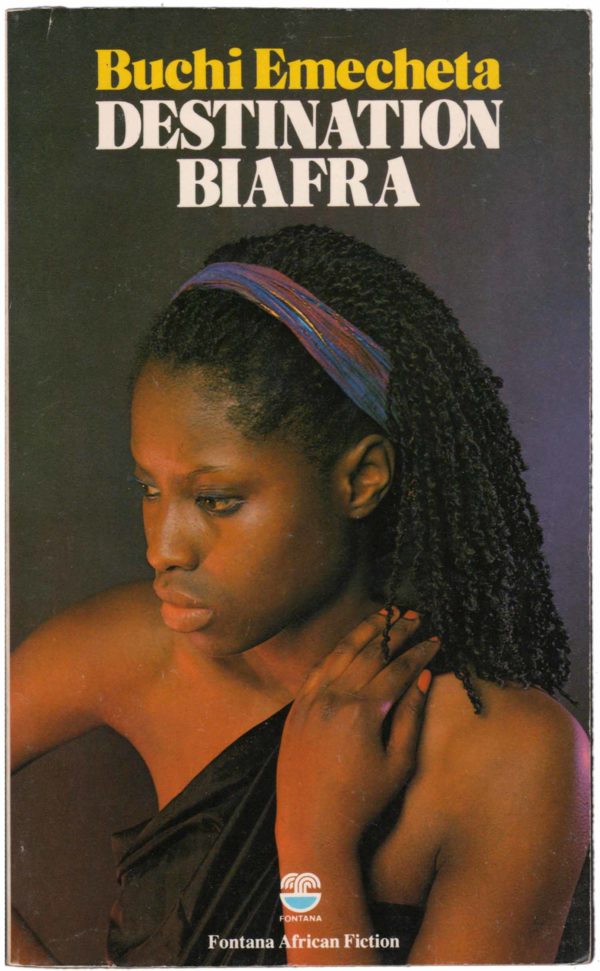
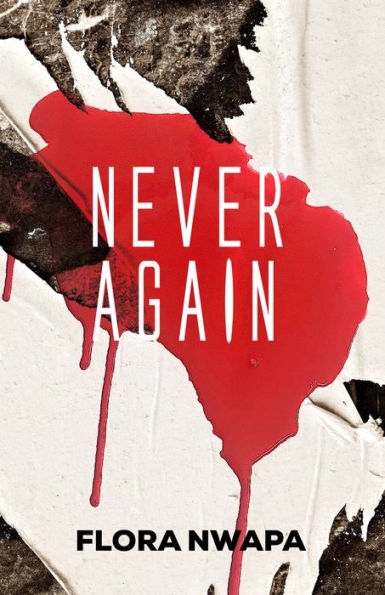
Women’s work is not secondary to the war: it is one of the reasons why communities continue to exist despite destruction. This is also why Nigerian women’s war writing, including works by Flora Nwapa and Buchi Emecheta, is important: it insists that survival, caregiving and emotional endurance are part of history, not marginal details. Adichie also makes the novel morally complex through the character of Ugwu. At first, Ugwu is presented as a young village boy who becomes Odenigbo’s houseboy. Later, he is forced into the war and becomes a soldier.
One of the most disturbing scenes in the novel is his participation in the gang rape of a bar girl. This scene also reinforces one of the novel’s most uncomfortable truths: sexual violence is not accidental in war. It is made possible by military power, group pressure, dehumanisation and impunity. In international law, this understanding became especially visible in the Prosecutor v. Jean-Paul Akayesu judgment of the International Criminal Tribunal for Rwanda, which recognised rape and sexual violence as acts that can form part of genocide and crimes against humanity when committed under coercive and systematic conditions.
The Biafran War was not legally addressed in the same way, and it should not simply be equated with the Rwandan genocide. However, the comparison helps us understand how women’s experiences in earlier African conflicts were often real, widespread and traumatic, even when they remained legally unrecognised and historically underdocumented.
Not just “our” review: What the experts say about Half of a yellow sun
The war in Biafra, thanks to the numerous humanitarian interventions that punctuated the late 1970s, reached the entire world and was widely discussed even in Italy during our parents’ time. The following excerpt may be especially disturbing to those who were children in the 1970s, whose parents in Europe watched over them from the Kwashiorkor and the “hunger of Biafra” when they didn’t want to eat dinner. In the final section of Adichie’s novel “Half of a Yellow Sun” (2006), Ugwu observes children playing:
“They ran lazily across the dry grass, aiming sticks like rifles, and mimicking the sound of gunfire with their mouths, raising clouds of dirt as they chased each other. Even the dust seemed weak. They were playing war. There were four of them. There had been five, until yesterday. Ugwu couldn’t remember the name of the fifth – what was he already? Chidiebele or Chidiebube? – but he remembered that lately it was said the child had swallowed a ball, and that his hair was falling out in clumps, and that his skin had gone from mahogany to a sickly yellow. The others often teased him, they called him: Breadfruit Belly (…) It was useless to warn them that the same would happen to them, sooner or later.”1
This is just a taste of Adichie’s narrative ability, which makes us experience the war from the inside, even for those who have only heard of it, even for those who have barely seen it on the news on television and now, decades later, can no longer distinguish the images of that conflict from just as many, hundreds, of similar bloody images.
What we want to emphasize is that the author, born only seven years after the end of the Nigerian civil war, constructed her novel by drawing on her family’s stories. This choice demonstrates how, decades after the conflict, the memory of the war and its most violent episodes remain alive, both in those who experienced it firsthand and in subsequent generations who have inherited the memory.
Particularly significant is the essay by Bernard Chiemela Dickson and Kinggeorge Okoro Preye, “History, Memory, and the Politics of National Unity in Adichie’s Half of a Yellow Sun and Achebe’s There Was a Country,” published by the University of Uyo. The authors focus on the theme of memory, emphasizing how war represents a central topic in literature because it allows us to reconstruct the past, reflect on the present, and, in some cases, prevent future mistakes. Writing thus becomes a tool for processing collective trauma and overcoming the burden of history.
According to Dickson and Preye, it’s not necessary to have personally experienced a traumatic event to effectively recount it: it’s sufficient to have been deeply affected by it on an emotional level. This is exactly the case for Adichie, who has repeatedly stated in different interviews that she grew up “in the shadow of Biafra.”2
Scholars also highlight how Adichie manages to blend “historical truth” and “artistic truth,” an aspect the author herself acknowledges both in the novel’s afterword and in several interviews. An interesting interpretative key concerns the title of the work itself. “Half of a Yellow Sun” actually recalls the flag of Biafra, composed of the Pan-African colors and featuring a rising sun with eleven rays, symbolizing the eleven Biafran provinces. From Adichie’s perspective, the half of the sun can be interpreted as the symbol of an unfinished national project: the Republic of Biafra, separated from the other half, represented by Nigeria.3
This image of division and complementarity runs throughout the novel. The twin sisters Kainene and Olanna, presented from the beginning as profoundly different and almost opposite, can be read as a symbolic representation of the relationship between Nigeria and Biafra: two entities connected but incapable of communicating, to the point of conflict.4 Contrary to what one might think, the novel is not only a story of pain, loss, destruction, and resistance. It is also a tale of self-determination, survival, and hope. By placing women at the center of the narrative, the novel can be read as a profoundly feminist work, highlighting the protagonists’ ability to confront and overcome the multiple forms of oppression generated by war and patriarchal society.5
Ugwu embodies, paradoxically, the novel’s most optimistic dimension. The young servant is conscripted into the Biafran army, facing and experiencing unjustifiable situations, including gang rape. This represents one of the most delicate and traumatic moments in the novel: the experience of war will profoundly affect him and lead him, at the end of the story, to write the novel’s internal manuscript, titled The World Was Silent When We Died.
His journey of growth transforms him from a naive and impressionable boy into a self-aware man, capable of confronting the horrors he witnessed and the guilt he has committed, including his participation in the afromentioned gang rape. Through writing, Ugwu is able to process his trauma and give meaning to the suffering he has experienced. Once again, narration takes on a therapeutic function: individual memories are transformed into collective memory, and personal history becomes a testimony for future generations.6
Finally, Half of a Yellow Sun is a novel about memory. Adichie was born after the Biafran War, but she grew up surrounded by its stories, silences and inherited trauma. By writing the novel, she transforms family memory into collective memory. The internal manuscript, The World Was Silent When We Died, expresses one of the central meanings of the book: Biafra was seen by the world, especially through images of famine, but its deeper human suffering was not truly heard. Scholars have noted that Adichie belongs to a generation of Nigerian writers who did not directly experience the war but inherited its memory and used literature to reopen a difficult national past.
This is where Adichie’s role as a Nigerian female writer becomes especially important. She does not simply recover a forgotten history; she changes the way that history is told. By placing women at the centre of the narrative, she challenges both the silence surrounding the Biafran War and the tendency to exclude women from the memory of conflict. Her novel reminds us that any history of war that ignores women is incomplete.
For this reason, Half of a Yellow Sun is not only a story of suffering, loss and destruction. It is also a story of endurance, responsibility and remembrance. Adichie shows that war is fought not only on battlefields, but also in homes, refugee camps, markets, bodies and memories. Women in the novel are wounded by history, but they also preserve life and dignity within it. Their experiences allow the reader to understand the Biafran War not only as a political tragedy, but as a deeply human one.
- C. N. Adichie, Metà di un sole giallo, Einaudi, Torino, 2008, pp. 413-414 (or. ed., Half of a Yellow Sun, 2006). ↩︎
- B. C. Dickson, K. O. Preye, History, Memory and the Politics of National Unity in Adichie’s half of a Yellow Sun and Achebe’s There was a Country, International Journal on Studies in English Language and Literature (IJSELL), Volume 2, Issue 5, May 2014, p. 82. ↩︎
- Ivi, p. 84. ↩︎
- Ivi, p. 83. ↩︎
- Ivi, p. 83. ↩︎
- Ivi, p. 83. ↩︎



Leave a Reply