

Edited by Elia Jason Granchi
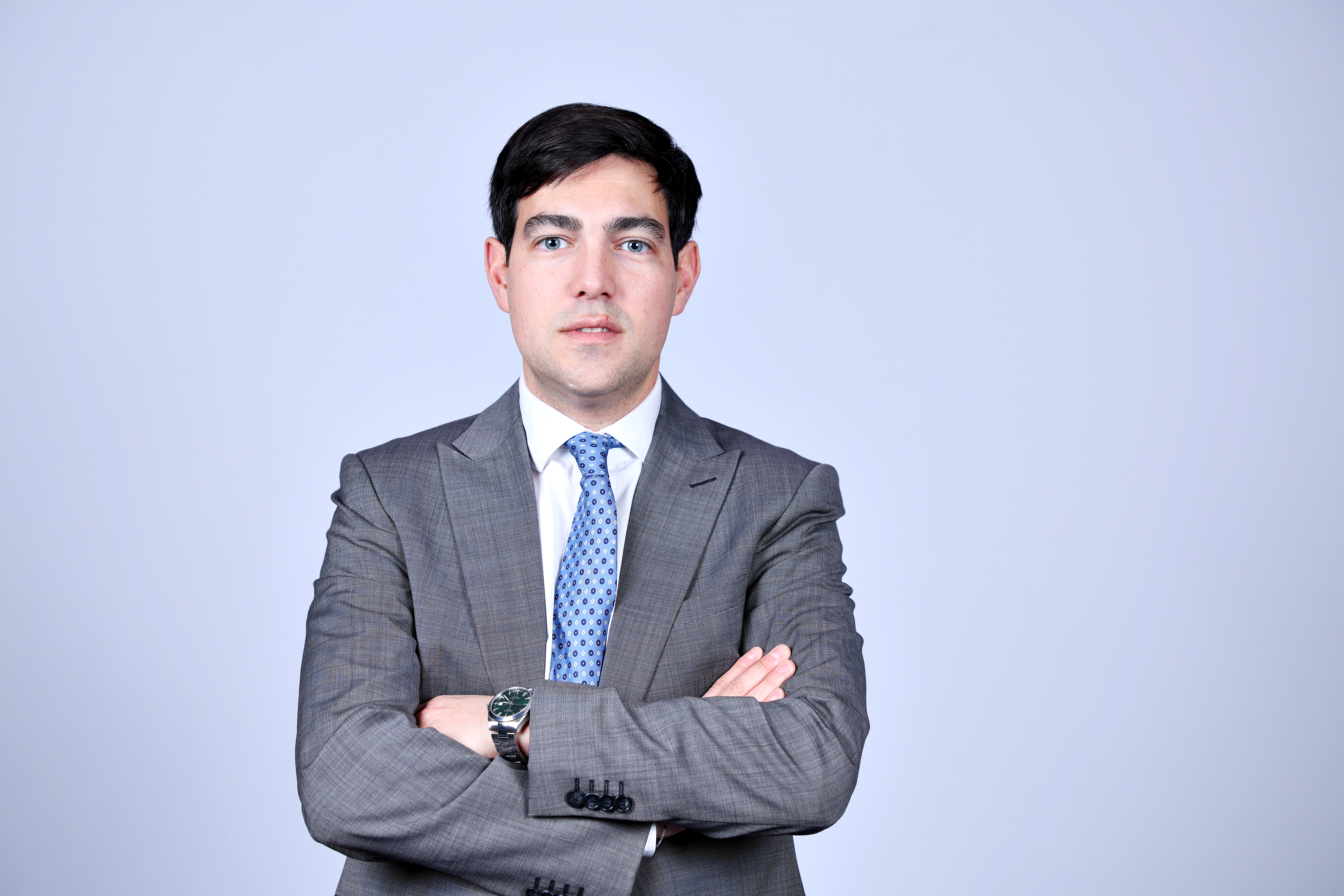
From the lecture halls of the “Cesare Alfieri” School to the heart of the European district, alumni Marco Fusaro’s journey serves as an inspiring blueprint for a successful international career.
After a decade of navigating the competitive landscape of the European Parliament, he now serves as the National Coordinator of the Italian Delegation to the European Committee of the Regions.
In this exclusive interview, Fusaro reflects on breaking out of the “EU Bubble,” the reality of institutional networking, and the power of professional adaptability. He also shares invaluable, candid advice for students aiming to turn their academic foundation into lasting stability in Brussels.
“To begin with, we’d like you to introduce yourself. How did your studies at the “Cesare Alfieri” School influence your decision to pursue an international career, and what were the key milestones that led you to consolidate your position in Brussels?”
“I graduated with 110 cum laude in 2011 in International Relations and European Studies. Immediately afterwards, I was awarded a traineeship grant at the European Parliament, in the Information Office in Rome, where I completed an initial six-month period, which was then renewed for another six months.
I then worked for a social cooperative in Florence, but I felt the need to open myself up to a professional experience abroad. I therefore worked on the electoral campaign of a Member of the European Parliament and, shortly afterwards, I was awarded a scholarship to the College of Europe, at the Natolin campus in Poland. That experience was decisive for my career path and allowed me to move to Brussels.
After that very formative year, I started a new traineeship in the office of a Member of the European Parliament in Brussels. I then worked for seven years at the European Parliament as an accredited parliamentary assistant for two MEPs, dealing with issues related to the internal market, digital policy, the budget, and economic affairs.
Throughout this path, the education I received at Cesare Alfieri proved to be fundamental: it provided me with a solid foundation, for example in contemporary history and international relations, as well as with the open-mindedness needed to operate in an international environment.
Currently, after passing a public selection procedure, I hold the position of technical secretary of the Italian delegation to the European Committee of the Regions. I work as a self-employed professional with a VAT number and follow the activities of this consultative body, an experience that has allowed me to further expand my professional network.”
People often speak of the so-called “EU Bubble” as a reality that, due to its specific features, may risk distorting the perception of those who experience it on a daily basis. After a decade spent in the European district, how do you manage to balance your identity as a “Eurocrat” with the need to remain deeply connected to the real needs and concerns of local territories, particularly Italian ones?
“That is a very interesting question, and yes, after many years, eleven in my case, this risk really does exist. I also see it among colleagues and friends who live in the so-called “European bubble”.
This dynamic stems from the fact that one ends up spending time more or less within the same network of people, who share similar habits: calendars that differ from the Belgian one, particular working hours, especially if one works at the Parliament, the Commission, or in the world of associations and lobbying, and also, on average, greater financial means. All these elements can, in some way, distort one’s perception of reality, distancing you from direct contact with local territories.
In my case, I believe I have partly rebalanced this distance thanks to the work I do today. I work with the members of the Italian delegation and with the network of regional offices in Brussels, maintaining a constant link with associations of regions and municipalities in Italy. The European Committee of the Regions is, in fact, a consultative body that represents and protects the interests of local and regional authorities, also effectively carrying out a role of coordination and representation at European level.
This has also changed my network: compared to the past, when I was more embedded in the European Parliament environment, today my network is more closely connected to the territories. The lifestyle may remain similar, but the type of interlocutors I engage with and the issues I deal with help me maintain a more concrete link with local realities.
Another important element is personal life. Since becoming a father, more than two years ago now, I have become much closer to the Belgian system in everyday life: from healthcare to the vaccination system, from childcare facilities to the school calendar, which is structured differently here, as well as social security and tax-related aspects. It is a very concrete way of experiencing the country and stepping outside the “European bubble”.
Finally, there is the question of my connection with Italy. Brussels is well connected, and this allows me to return to Florence four or five times a year. This is fundamental for me, because it enables me to maintain strong roots in my family and friendships, and to remain anchored to the local and community dimension that shaped who I am. Ultimately, that is precisely where my path comes from.”
Was there any moment of cultural shock between Italy and Brussels when you started working there on a permanent basis?
“Actually, the real cultural shock came earlier, when I was 23 and won a scholarship with Korean universities, spending five months in Suwon, at Ajou University, in South Korea. There, the context was completely different.
Between Belgium and Italy, on the other hand, the differences are much more limited: the systems are similar, and everyday life is not so distant. In Brussels, Italian products are easy to find, my fridge, for example, is full of things I would normally buy at Coop or Esselunga.
In general, the European Union contributes greatly to bringing countries closer together: whether you are in Belgium, Spain, or Poland, there is strong coordination. For this reason, living in Brussels hardly involves a real cultural shock.”
The path towards a solid career in the European institutions is often perceived as a mosaic of different experiences, ranging from initial traineeships to roles involving technical or political assistance. In your view, what is the main challenge in moving from a training phase to positions of greater responsibility, and how important is specialisation compared to the ability to adapt to different institutional contexts?
“From a professional point of view, the most difficult phase, and also the one that can generate the most frustration, is the transition from a traineeship to real job stability.
Brussels is a very competitive environment, but at the same time it offers many opportunities. Generally speaking, it is not impossible to find a first traineeship or an initial work experience. The real challenge comes afterwards: being able to turn that initial experience into a more lasting professional path, with contracts that go beyond 6–7 months or one year.
At this stage, perseverance matters a great deal, and specialisation also plays a role. Having specific expertise in a given sector makes you stronger and more competitive on the labour market. However, there is also another, more generalist approach, which can prove equally effective.
In my case, for example, my path has been quite cross-cutting: I started by dealing with the internal market, consumer protection, and digital policy, then moved on to the budget and later to regional and cohesion policy. This meant that I did not become hyper-specialised in a single field, but instead developed a strong ability to adapt.
Being a generalist, in fact, is pragmatically useful because it helps you seize different opportunities and reinvent yourself when necessary. By contrast, those who are highly specialised, for example in energy, agriculture, or international trade, build very strong and recognisable expertise.
There is no absolutely right choice: it depends very much on one’s personality, flexibility, and willingness to accept opportunities that may not initially have been part of one’s plans. Chance, context, and the ability to seize opportunities often also play a role.
What truly makes the difference, however, is consistency. From my personal experience, I have almost never met people who, while continuing to search with determination, remained unemployed in Brussels for more than six months.”
As National Coordinator at the European Committee of the Regions, you are positioned at the intersection between national associations, such as ANCI and the Conference of Regions, and the EU institutions. What are the main challenges in coordinating a delegation composed of 24 full members and 24 alternate members, often with very different political orientations?
“To carry out this job, several qualities are needed: patience, political sensitivity, transparency, and fairness. It is also essential to be able to work with all political groups, including those whose positions may be very different from one’s own.
This is part of the role: as a technical figure serving a delegation, the objective is not to express a personal position, but to facilitate participation, support the production of content, and contribute to protecting the interests of the associations in Brussels.
In addition to technical skills, relational skills are therefore essential as well: flexibility, an openness to dialogue, responsiveness, and a good knowledge of how the “machine” works, namely the European Committee of the Regions, its mechanisms, and its interlocutors.
It is a complex job, also because one may find oneself supporting a request with one political group one day and working with another group the next. In my case, the complexity is even greater because I work with four different actors, the Conference of Regions, the Autonomous Provinces, the Legislative Assemblies, and ANCI, which sometimes express different sensitivities and priorities.
For example, on issues such as cohesion policy, the positions of municipalities may differ slightly from those of regions or provinces. This requires constant work of mediation and synthesis, although this is not always possible.
And ultimately, this is precisely one of the most authentic aspects of politics: accepting that different interests exist and that they cannot always converge. Not everything can always be synthesised, but it is precisely in this complexity that the value and stimulation of the work also lie.”
Looking to the future, what skills do you consider essential today for making one’s way in the European environment, beyond academic preparation? And if you had to give one key piece of advice to a student who wishes to pursue this path today, what would it be?
“Beyond academic preparation, which remains fundamental, one then begins a professional path that can also be quite complex. For this reason, flexibility, open-mindedness, and above all perseverance are needed: you have to insist, keep trying, and not become too discouraged.
One piece of advice I would give, also based on my own experience, is to avoid falling into complaining: it is a common tendency, and one I have had myself, but it does not help you move forward.
Another important aspect is attitude: knowing how to behave in a professional environment with a positive and constructive spirit really makes a difference.
Finally, looking at the medium term, I believe it is useful, whenever possible, to make a change after a few years: sector, organisation, or network. Not in a chaotic way, but by seeking new experiences that allow you to grow. Working in different contexts helps broaden your skills, build new contacts, and avoid taking professional relationships for granted.”