

Edited by Andrea Corinaldesi
Cover image. https://www.bing.com/images/search?view=detailV2&ccid=RjWBSPf4&id.

This article is an abstract of a class on Religion in International Relations, held by Professor Laura De Gregorio, Associate Professor in Law and Religion at the University of Florence.
The setting is Canada in 2012. A woman, N.S., is denouncing before the Supreme Court of Canada a sexual assault perpetrated by two men against her. She is a Muslim woman wearing the niqab, a garment that covers the entire head except for the eyes. When she was called to testify, the accused objected in the courtroom: “She must remove the niqab so the judges and we can see her full face, necessary to assess her credibility”. N.S. responded, “Wearing the Niqab is part of my religious beliefs. Being forced to remove it would violate my freedom of religion”.
A serious legal question
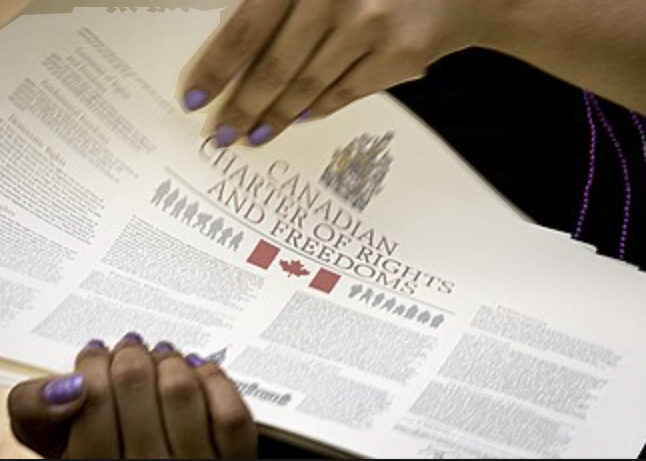
Canada operates a bijural legal system, combining common law (in most provinces) with civil law in Quebec. Under the Constitution Act, 1982, the Canadian Charter of Rights and Freedoms established rights and freedoms. Notably, the charter stresses the extent to which rights shall be considered absolute, with only a few exceptions for limits prescribed by law and demonstrably justified in a free and democratic society.
The case of R. v N.S. (with R standing for Regina, used in criminal cases) raised a serious constitutional dilemma between two rights guaranteed by the Charter, namely N.S. ‘s freedom of religion and the accused’s right to a fair trial. Therefore, when can a witness be required to remove a religious veil while testifying in a criminal trial?
Is the use of the Niqab an obstruction to justice?
The lower Courts disagreed with each other on the matter: the preliminary inquiry judge ordered the removal of the niqab for N.S., while the Court of Appeal of Ontario overturned this previous sentence, arguing that the judge did not apply the correct test.
The sharp contrast between the two sentences made even clearer the underlying problem: how to assess which right had to prevail. When the case reached the Supreme Court of Canada, the seven judges of the body were not unanimous in the decision. In particular, three opinions were expressed on the case.
Four judges for the majoritarian opinion
Led by Chief Justice McLachlin, the first woman to hold the role in Canada, the majoritarian opinion argued that no absolute decision could be found.
A case-by-case balancing approach was therefore created by the four judges, aiming to study the specific situation through a legal framework based on a 4-step test.
1. True belief: the fondness of faith of the person proven for the test shall be sincere.
2. Harm to beliefs: would the removal of the niqab cause serious harm to her beliefs?
3. Obstacle to fair trial: would the removal of such a garment obstruct the trial?
4. Which right prevails in case of conflict?
In R v N.S., the Court affirmed the equal importance of the competing rights and refused to adopt a categorical rule. Instead, it articulated the contextual balancing test and remitted the case to the lower courts, instructing them to reassess the evidence in light of this framework.
One critique that may arise about the test and how that may be incorrectly used is the way “true beliefs” are assessed. Religion and related beliefs are, indeed, quite subjective; no test can definitively determine whether one person is faking it or truly holds faith. Furthermore, on what basis can a court assess if the removal of a religious symbol may cause harm to the person involved?
Two judges for the concurring opinion
The idea of the 4-step test was challenged by two judges who opposed the mainstream decision: the niqab shall never be worn in a public courtroom. The reasoning behind this argument relies on the openness of trials, which according to the two judges, is essential for assessing the credibility of witnesses. They believed that a case-by-case sentencing would have led to delays in justice, so a clear rule had to be established.
One judge for the dissenting opinion
The seventh judge, Rosalie Abella, disagreed with the majority: “the case shall not be sent back to lower courts, N.S. should be allowed to wear her niqab”.
In her dissent in R v N.S., judge Abella warns that compelling a witness to remove her niqab risks more than an individual infringement of religious freedom: it may deter similarly situated women from seeking judicial redress altogether. Such a requirement places individuals in an untenable position, as they will be forced to choose between fidelity to their faith and access to justice, thereby undermining the inclusiveness of the legal system. If participation in legal proceedings is conditional on the abandonment of core religious practices, the justice system risks marginalising those it is meant to protect, with the further danger that individuals may disengage from formal legal processes entirely. In this sense, access to justice is not merely procedural but foundational to the legitimacy of a democratic order.
Furthermore, Abella argues that there is no need to see someone’s face to assess their credibility, as the concurring opinion judges argued. If testimony from disabled witnesses, from people with facial or speech limitations or even interpreters is accepted, how would wearing a niqab be different?
What happened next?
As previously noted, after R v N.S., the Supreme Court declined to impose a categorical rule, instead articulating a contextual balancing test and remitting the case to the lower courts. On rehearing, those courts concluded that, in the specific circumstances, the complainant would be required to testify without the niqab.
However, some reflections emerge from this decision. On the one hand, the Court sought to avoid establishing any predetermined hierarchy between freedom of religion and fair trial guarantees; on the other, it raises questions as to whether, in practice, such balancing can fully safeguard minority religious expression when it conflicts with entrenched procedural norms.
The case of R v N.S., beyond its specific outcome, invites broader reflection:
- What does it mean for an individual if the state in which they live and participate makes the exercise of their religion a condition for accessing justice?
- Even where such a limitation is accepted, how might it affect one’s personal identity and relationship with their community?
- Conversely, what are the implications if accommodating religious expression risks undermining fundamental guarantees of the trial process?