

Written by

Master’s student in International Relations at the University of Florence with a background in International Relations for Marketing and Political Science. She writes about politics and society with an analytical and interdisciplinary approach, with research interests ranging from human rights to political communication.

Master’s student in International Relations and European Studies, University of Florence.

She is a Master’s student in International Relations and European Studies at the University of Florence (IT). Having a bachelor’s degree in Political Science and International Studies, she now writes geopolitical articles focusing on Middle East and Africa.
Edited by Sokhna Fall
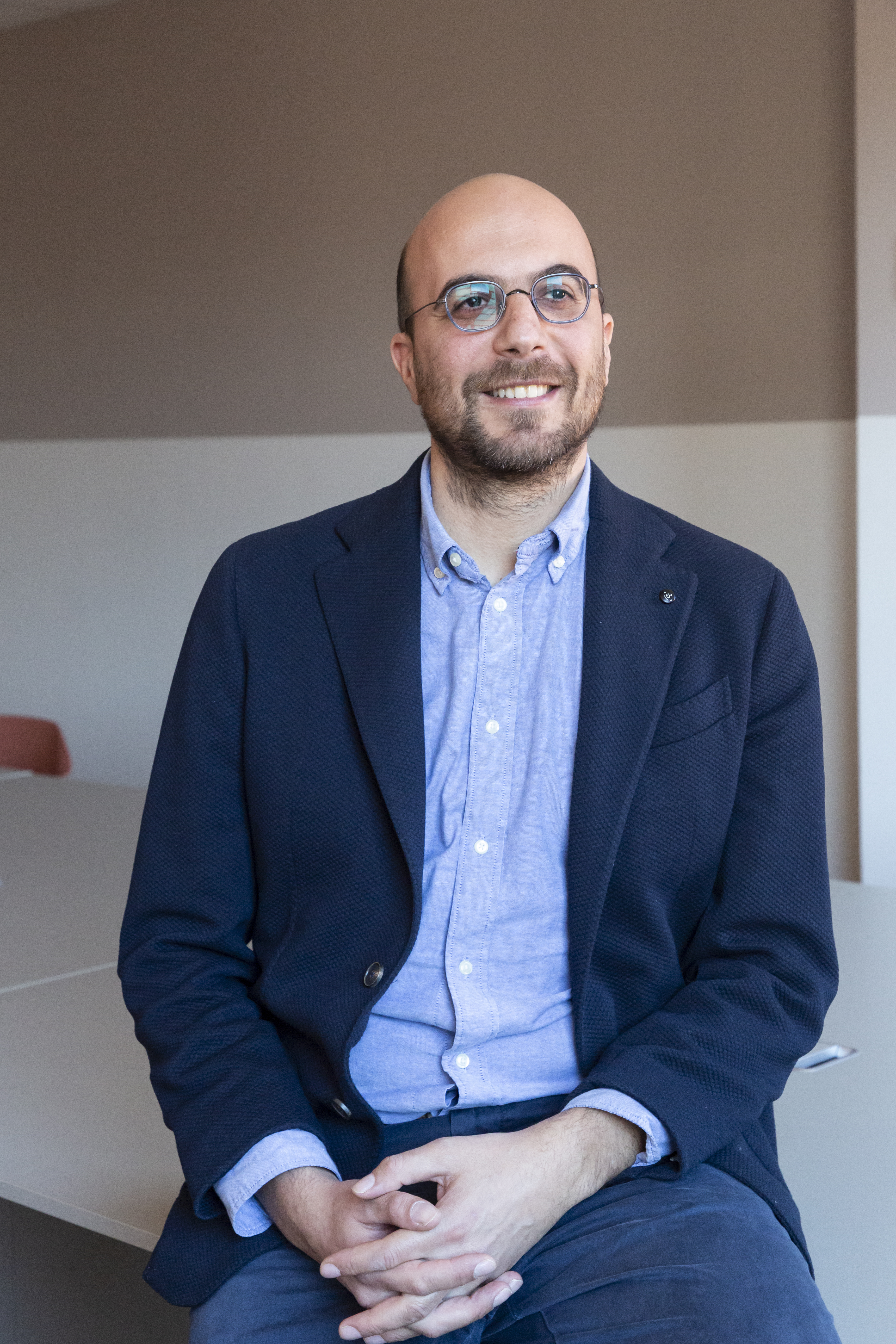
Professor Alessandro Bufalini, Associate Professor of International Law in the Department of Legal Sciences at the University of Florence, is a leading scholar in international law and international criminal law. His research focuses on key challenges in the contemporary international legal order, including the role of international courts in addressing mass atrocities and maintaining peace, the relationship between politics and international justice, and the question of reparations for colonial crimes.
In this interview, we asked Professor Bufalini to reflect on the current state of human rights law, with a particular focus on the role of international human rights courts and the emerging challenges shaping the global landscape.
“The principle of state sovereignty continues to represent a limit to the international protection of human rights. How is the relationship between state sovereignty and international obligations in the field of fundamental rights evolving? Are we witnessing a strengthening or a weakening of these obligations?”
“The tension between state sovereignty and the protection of human rights is usually presented as a conflict between the interests and prerogatives of the State and the universality of fundamental rights. However, this framework may need to be more precisely defined in order to capture its full complexity. It is important to emphasize that adherence to international instruments for the protection of human rights is itself an expression of sovereignty: when a State ratifies a treaty or accepts the jurisdiction of an international human rights court, it voluntarily assumes legal binding obligations and agrees that an international judge may determine the existence and scope of those obligations through binding judgments.
Perhaps the tension is not so much between sovereignty and human rights in an absolute sense, but rather between the consensualist principle—according to which States are bound only by obligations they have accepted—and the authority of international judges to extend the scope of fundamental rights through evolutive interpretations aimed at ensuring their effective protection. For decades, courts such as the European Court of Human Rights have strengthened the protection of fundamental rights through innovative interpretative techniques.
In recent years, however, this dynamic appears to have encountered increasing resistance in certain areas, as States seek to limit the scope of their human rights obligations as they have been progressively developed through international case law. The current challenge lies in maintaining an evolutive without undermining the element of State consent, which remains essential to the legitimacy and functioning of international courts.”
“International and regional human rights courts play an increasingly central role. In your view, what are the main legal limits to the effectiveness of their decisions, and what mechanisms exist to strengthen their implementation?“
“International human rights courts face a challenge common to all international courts: the absence of coercive power and consequently, the lack of fully effective instruments to ensure compliance with their decisions.
Compliance with judgments, and more generally with international obligations, depends largely on the willingness of States. This willingness is shaped by a variety of factors that are not strictly legal in nature, including political considerations, diplomatic dynamics, and public or media pressure.
Within the framework of the European Convention on Human Rights, the supervision of the execution of judgments is entrusted to the Committee of Ministers of the Council of Europe, a political body that can call for corrective measures and legislative action, but whose powers are ultimately limited to political pressure on non-compliant States.
In such a system, the role of civil society becomes crucial. Through associations, public campaigns, strategic litigation, and advocacy activity, it helps exert pressure on States, raise public awareness, and encourage the adoption of measures necessary to ensure the effective implementation of rights recognized by the courts. In this sense, strengthening the execution of judicial decisions depends not only on formal monitoring mechanisms, but also on the ability to build social and political consensus around the protection of human rights.”
“Many scholars speak of the fragmentation of international law. Does the multiplication of norms, courts, and systems represent a risk for the coherence of human rights protection, or can it constitute an opportunity to develop more advanced standards?“
“The fragmentation of international law is often described as an ambivalent phenomenon. On the one hand, the proliferation of courts, tribunals, and dispute settlement mechanisms can be seen as an opportunity: the expansion of the ‘fora’ in which international law is applied promotes its diffusion and consolidation, and, above all, the development of more advanced standards, particularly in the field of human rights protection. The existence of multiple jurisdictions can foster judicial dialogue and contribute to the progressive evolution of legal norms.
On the other hand, fragmentation also entails significant risks. The main one is interpretative divergence: different tribunals may reach different conclusions on similar issues, leading to a lack of uniformity in the application of rules and, consequently, to legal uncertainty.
This can undermine the overall coherence of the system and the predictability of decisions. These risks, however, are partly mitigated by the tools available to judges. Although there are not always binding legal rules requiring coordination, courts often rely on practices such as judicial dialogue, reference to the case law of other jurisdictions, and forms of self-restraint and deference.
These mechanisms, also dependent on judicial sensitivity of judges, help reduce inconsistencies and promote a certain degree of harmonization. In conclusion, fragmentation is not necessarily a negative element: while it raises issues of coherence, it can also represent an opportunity for the strengthening and development of international law, provided that courts are able to manage the system’s pluralism in a conscious and balanced manner.”
“In recent years, there has been a growing juridification of issues such as migration, climate change, and new technologies. Do you think that international human rights law is adequate to address these new challenges, or are new legal categories necessary?“
“International human rights law has shown a remarkable capacity to adapt to new challenges such as migration, climate change, and technological transformations. Rather than requiring the creation of entirely new legal categories, it appears that existing instruments, if interpreted in an evolutive manner, are already capable of providing meaningful responses.
An emblematic example is represented by the case law of the European Court of Human Rights, which has progressively expanded the scope of traditional rights. In environmental matters, for instance, the Court has linked environmental protection to the right to life and to respect for private and family life, while also recognizing an increasing role for associations in access to justice.
Similarly, in the field of migration, it has broadened the scope of the prohibition of torture to include the principle of non-refoulement, as well as extended the notion of State jurisdiction. These developments show how human rights law already possesses potentially adequate tools, provided they are interpreted in a dynamic way. Moreover, the introduction of new legal categories is neither a straightforward process nor one free from risks, particularly in terms of fragmentation and legal uncertainty.
The real issue, in my view, is the one I referred to in the first question: finding a balance between the role of the courts, which are called upon to ensure the effectiveness of existing rights while also fostering their evolution, and that of politics, which is responsible for defining priorities and shaping collective choices.”
“At a time when we are witnessing increasingly frequent violations of international law and human rights, and when international courts seem able to have only a rather limited impact on power dynamics, there is a growing perception that international responsibility often remains without concrete consequences. In light of this scenario, many wonder whether there is still room for hope. From your perspective, do international law and the human rights protection system still have the capacity to evolve toward greater accountability of States, or are we witnessing a return to a phase in which force prevails over law? In your opinion, is there still reason to hope in the role of international law as a real instrument of peace and justice?“
“In the current context, skepticism about the effectiveness of existing instruments is entirely understandable. Today, we can clearly observe a structural tension that has long been inherent in international law: the tension between force and law.
The point, I believe, is that there are in fact real alternatives. International law remains the only shared normative framework capable of placing limits—albeit imperfect ones—on state power and of preventing a drift toward a logic of pure force, a sort of ‘war of all against all.’ States themselves, also for reasons of political realism, continue to have an interest in maintaining this system, accepting at least in part legal constraints that enable their interaction exchanges and coexistence.
The main problem today seems to be another: the loss, or at least the weakening, of an ideal dimension that in other historical moments sustained the development of international law and the protection of human rights. Without this normative and ideal tension, law risks being reduced to a mere technical instrument, easily circumvented or emptied of substantive meaning.
It is precisely for this reason that the space for hope cannot be entrusted solely to institutions but must also be cultivated within society: in universities, in courtrooms, and in public spaces. It is there that the legal and political culture capable of giving strength and legitimacy to norms is built. International law will continue to be challenged and violated, but this does not mark its end. On the contrary, it is precisely in times of crisis that its necessity becomes evident. Hope, therefore, is not naïve: it is a conscious choice, grounded in the idea that, without law, the scenario would inevitably be worse.”