

Edited by Corinaldesi Andrea
Abstract: This article provides a critical reading of Francesca Albanese’s “Quando il mondo dorme” (When the World Sleeps), situating it within the broader context of the events that transpired in Palestine in 2025. The article utilizes an analytical approach to examine the narrative structure and legal framework of the text. Through this analysis, the article demonstrates how the book functions as an interpretative instrument that facilitates the examination of colonial violence and international inaction. The year 2025 is a critical juncture where the nexus of crime, impunity, and global indifference intersect. Albanese’s narrative extends beyond mere documentation of Palestine, delving into the complexities of its political and media suppression.
Introduction
In recent years, the Palestinian question has undergone a progressive shift from the realm of legal discourse to that of emergency, security, and exception. “Quando il mondo dorme” (When the World Sleeps), by Francesca Albanese, fits into this category as a profoundly political yet not ideological work. It is a book that restores centrality to the victims through the medium of individual stories that shed light on systemic structures of domination.
The year 2025 represents a pivotal juncture in this trajectory. This is not solely due to the escalation of violence in the Gaza Strip and the recurrent failure of ceasefires, but also due to the normalization of international silence that has accompanied these events. In this context, Albanese’s book assumes a value that transcends mere testimony, metamorphosing into an interpretative framework capable of interconnecting biographies, international law, and political responsibilities.
The objective of this review is to interpret “Quando il mondo dorme” not merely as a narrative about Palestine, but rather as a critical instrument that facilitates comprehension of the reasons why, in 2025, the global community opted for a state of slumber.
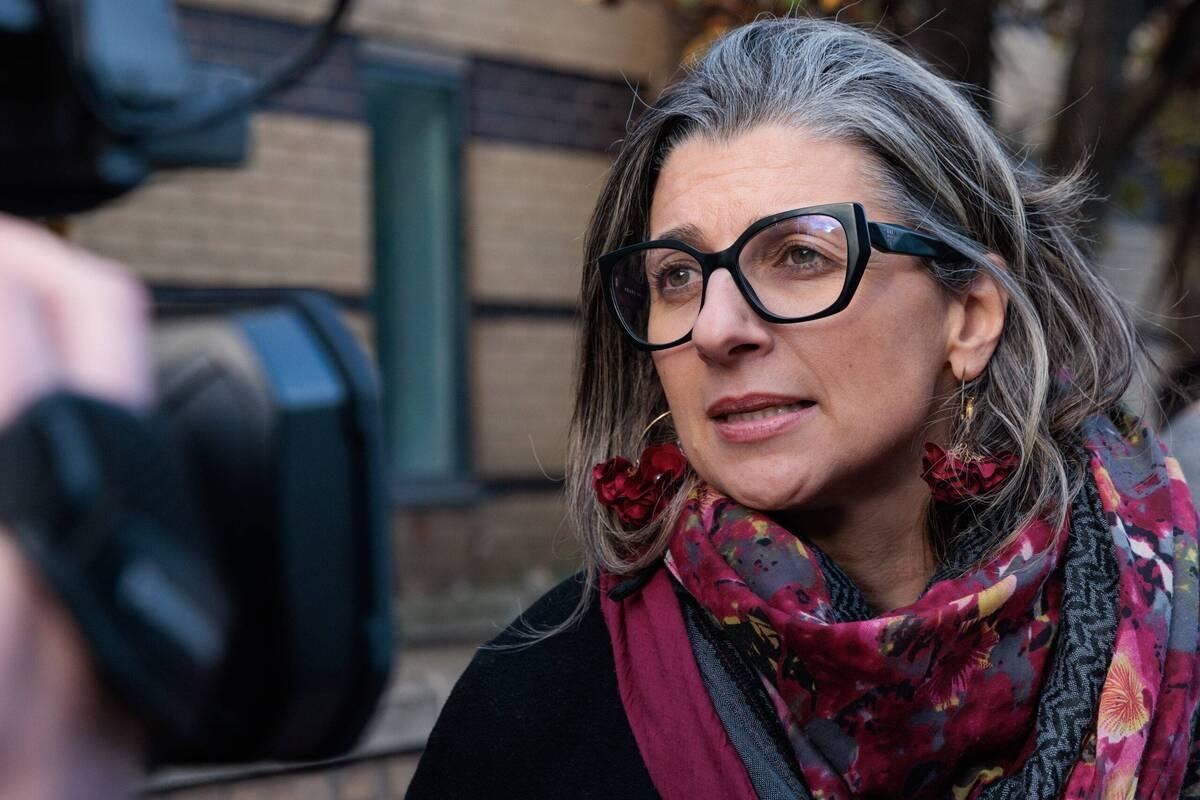
Francesca Albanese, the UN Special Rapporteur on the Occupied Palestinian Territories (OPT), is interviewed after speaking at Queen Mary University of London on 12th November 2024 in London, United Kingdom. [Photo by Mark Kerrison/In Pictures via Getty Images]
Francesca Albanese
The author, Francesca Albanese, was already a well-known name in academic circles in Palestine. Unfortunately, even those who peruse a daily newspaper have recently become aware of her. She obtained her bachelor’s degree in Law from the University of Pisa in 2001, subsequently pursued a master’s degree in International Development from the Institute for Advanced International Studies, and specialized in International Human Rights Law at the School of Oriental and African Studies in the United Kingdom. She earned a PhD in Refugee Studies from the University of Amsterdam. She has worked closely with undocumented migrants from Morocco, both for CGIL and UNDP, and has been an international observer since 2002, initially in Pakistan, then Guinea Bissau and Haiti. Since 2010, she has been involved with Palestine, working as a legal officer for UNRWA’s International Legal Division in Jerusalem, where she conducted analysis and research on humanitarian law. She has spearheaded regional research projects on forced displacement in the Arab world, with a particular focus on the political and identity aspirations of Palestinian refugees in Jordan.
In 2022, she was appointed by the Human Rights Council to serve as UN Special Rapporteur, tasked with investigating violations of international law in the Occupied Territories. Since 2020, she has provided extensive body of literature on the subject1.
Nevertheless, while the academic community has lauded her efforts “to protect human rights in the OPT [Occupied Palestinian Territories] and her awareness of the alarming violations of Palestinian rights,”2 since February 2023, politicians from the US and Italy have been advocating for her removal and replacement. On July 5, 2025, the US government imposed sanctions on Albanese, citing her support for the International Criminal Court’s investigation into Israeli Prime Minister Benjamin Netanyahu3, with Albanese accused of anti-Semitic sentiments. Subsequent media coverage has drawn attention to her struggles as an undesirable person in the US, where her assets have been seized4. In December 2025, she engaged in a meeting with several Italian institutions of higher education, which were subsequently inspected for alleged crimes related to her statements5, and she was removed from the list of scholars at Georgetown University for “spreading hatred.6”
The book

“When the World Sleeps: Stories, Words, and Wounds of Palestine7” frames ten stories of ten very different characters. From victims of bombings such as the child Hind Rajab, about whom the film “The Voice of Hind Rajab8” was presented at the 82nd Venice Film Festival and won the Silver Lion, to walking the streets of Jerusalem through the dual perspectives of George, who shows its wonders, and Abu Hassan, who instead guides readers through the suffering on the margins of the city.
The book’s narrative strength lies in its reconstruction of a “cartography of experiences”: the author uses each character to deepen and complicate her implicit thesis; each biographical journey highlights different aspects of the Palestinian question. Through their stories, we are able to recognize immediate suffering, ideological contradictions, resistance, and geopolitical implications. Albanese challenges rhetoric through the medium of lived reality, as evidenced by Alon Confino, a Jew and Holocaust scholar who acknowledges Israeli apartheid and wants it to end. By highlighting the principles of international law recognized for the historically fragile, Albanese effectively dismantles accusations of anti-Semitism.
The historical juncture
The year 2025 was marked by three primary phases that shaped the Palestinian pathway: the humanitarian crisis, the truce, and the silence.At the start of the year, Qatar, Egypt, and the United States mediated a ceasefire agreement between Israel and Hamas. The initial phase of the agreement stipulated a 42-day cessation of hostilities, Israel’s withdrawal from a 700-meter buffer zone, the repatriation of displaced persons, and the exchange of Israeli hostages for Palestinian prisoners9.
However, in March, the Israeli government breached the agreement and imposed a total three-month blockade on the Gaza Strip, preventing food, water, medicine, fuel, and electricity from reaching the civilian population10. In order to break the naval blockade, the Freedom Flotilla Coalition, a network of non-violent activists11, organized a series of maritime missions between May and July. In the first month, the ship Conscience was struck by drones in international waters12, a distance of 14 miles from the border with Malta; the ships Madleen – which was transporting high-profile activists, including Greta Thunberg and MEP Rima Hassan – and Handala were intercepted and their crews arrested and deported by the Israeli Defense Forces13. Consequently, on August 31, 52 ships from 44 different countries embarked on their journey: it was the largest civilian aid mission to date for Gaza. Their journey was disrupted by drones and other such means, thus prompting Spain and Italy to deploy military escorts14. However, the ships did not reach Gaza; 42 of them were intercepted in international watersand 450 activists were detained and deported15. The 11 ships that departed on October 3 proved also unsuccessful.
Meanwhile, President Trump facilitated a ceasefire agreement, which stipulated, in subsequent phases, a truce, the withdrawal of Israeli troops, the release of hostages and prisoners, and later the reconstruction of the Strip under the administration of Palestinian and international authorities16. However, just nine days after the truce was signed, Israel launched a bombing raid on Rafah and impeded the entry of aid again, accusing Hamas of violating the agreement17; on October 27, Gaza City, Khan Younis, and Nuseirat were hit. The second peak was documented two days later18. Between November and December, Israeli violations intensified, with direct targeting of civilians and military vehicles19. Despite the IDF announcing its intention to attack “Hezbollah targets” in Lebanon and Defence Minister Israel Katz declaring that Israel would never completely withdraw from Gaza, the White House welcomed Benjamin Netanyahu at the end of the year to discuss “phase 2” of the ceasefire agreement20.
All this amid international silence.
While the United States has adopted a paternalistic stance, actively engaged in the peace process and having endorsed the president’s signature on the peace agreement, the European Union has emphasized Hamas’s refusal to demilitarize as an obstacle to peace21, and the United Nations is gagged by the US’ veto power. Turkey remains the sole voice that has not aligned with the prevailing consensus22.
A thorough media analysis has revealed a systematic distortion of the public narrative. Israeli perspectives are given three times more space than Palestinian ones. The expression “right to exist” for Israel appears “overwhelmingly” compared to its use for Palestine. The context of occupation is systematically omitted, and military terms such as “precision strikes” and “human shields” recur dozens of times, normalizing state violence as “rational self-defense23.” Furthermore, the UK Media Monitoring Center documented that the language describes Israelis as victims 11 times more frequently than Palestinians. This numerical disparity mirrors the disparity in physical impact (for every Israeli child killed on October 7, Israel killed at least 360), yet media coverage reverses this proportion24.
Conclusions
In 2025, Palestine emerged as a prime example of the crisis of the international order based on law. The events in Gaza not only marked yet another military escalation, but also highlighted the inability, or unwillingness, of international institutions to selectively apply the rules that they themselves claim to be universal.In this scenario, “Quando il mondo dorme” emerges as a pivotal interpretative instrument. Francesca Albanese’s book does not merely document violence; rather, it meticulously reconstructs its political and legal grammar, thereby demonstrating how silence, narrative distortion, and impunity constitute forms of active complicity. When evaluated in the context of the year 2025, the text facilitates comprehension of the evolution of the Palestinian exception into a tolerated norm.
The work does not proffer conciliatory resolutions or generic moral pleas. Instead, it advocates for a reversion to political responsibility and the law as a concrete praxis. In a context in which the world continues to “sleep,” the book’s value lies precisely in its ability to disrupt this quietude, rendering ignorance impossible and neutrality increasingly fragile.
- Francesca P. Albanese. (2023). Università Di Bologna. https://www.unibo.it/it/ateneo/amministrazione-trasparente/consulenti-e-collaboratori/tabella-incarichi-scaduti/2023?id=37678&format=cv ↩︎
- Cfr. More than 100 rights groups condemn Israel’s smear campaign against UN Special Rapporteur Albanese. (n.d.). WAFA Agency. https://english.wafa.ps/Pages/Details/132846 ↩︎
- Bateman, T. (2025, July 10). US sanctions UN expert Francesca Albanese, critic of Israel’s Gaza offensive. https://www.bbc.com/news/articles/c70rllxr0kyo ↩︎
- Le sanzioni degli Stati Uniti contro la relatrice dell’ONU Francesca Albanese. (2025, July 10). Il Post. https://www.ilpost.it/2025/07/10/sanzioni-stati-uniti-francesca-albanese/ ↩︎
- Interventi di Francesca Albanese nei licei, il ministro Valditara manda gli ispettori in Toscana. (2025, December 12). RaiNews. https://www.rainews.it/articoli/2025/12/interventi-di-francesca-albanese-nei-licei-il-ministro-valditara-manda-gli-ispettori-in-toscana-70c3342a-5c9a-44e9-8ced-eab1bb200b26.html ↩︎
- Tambini, E. (2025, December 27). Francesca Albanese, Georgetown cancella la relatrice dall’elenco degli studiosi. TGCOM24. https://www.tgcom24.mediaset.it/2025/video/francesca-albanese-georgetown-cancella-la-relatrice-dall-elenco-degli-studiosi_107405452-02k.shtml ↩︎
- Albanese, F. (2025, May 24). Quando il mondo dorme. Rizzoli Libri. https://www.rizzolilibri.it/libri/quando-il-mondo-dorme/ ↩︎
- La voce di Hind Rajab. (2025, September 25). IMDb. https://www.imdb.com/it/title/tt36943034/ ↩︎
- Abdulsamad, S., Farraj, B., Abu Rokbeh, T. A., & Buttu, D. (2025, January 28). Accordo per il cessate il fuoco a Gaza: tregua ma non fine dell’occupazione coloniale. Assopace Palestina. https://www.assopacepalestina.org/2025/01/29/accordo-per-il-cessate-il-fuoco-a-gaza-tregua-ma-non-fine-delloccupazione-coloniale/#:~:text=L%E2%80%99accordo%20delinea%20un%20piano%20in%20tre%20fasi.%20La%20prima%20fase%2C%20della%20durata%20di%2042%20giorni%2C%20prevede%20il%20rilascio%20degli%20israeliani%20detenuti%20a%20Gaza%20e%20dei%20palestinesi%20detenuti%20in%20un%20accordo%20di%20scambio%2C%20la%20cessazione%20delle%20ostilit%C3%A0%2C%20il%20ritiro%20delle%20forze%20israeliane%20in%20una%20zona%20cuscinetto%20di%20700%20metri%20e%20il%20ritorno%20dei%20palestinesi%20sfollati%20nei%20loro%20quartieri. ↩︎
- Gaza population faces critical risk of famine, global hunger monitor says. (2025, May 12). Reuters. https://www.reuters.com/world/middle-east/entire-population-gaza-continues-face-critical-risk-famine-global-hunger-monitor-2025-05-12/
↩︎ - The Freedom Flotilla Coalition. (n.d.). Freedom Flotilla Coalition. https://freedomflotilla.org/ ↩︎
- Attaccata la Freedom Flotilla: Nave in difficoltà, necessaria un’azione immediata da parte del governo maltese. (2025, May 2). Freedom Flotilla Coalition. https://freedomflotilla.org/it/2025/05/02/attaccata-la-freedom-flotilla-nave-in-difficolta-necessaria-unazione-immediata-da-parte-del-governo-maltese/ ↩︎
- BBC News. (2025, June 9). Gaza activists’ aid boat with Greta Thunberg on board docks in Israel. https://www.bbc.com/news/live/clyg5x15n3zt?page=2 ↩︎
- Doron, D. (2025, September 25). The Global Sumud (“Perseverance”) Flotilla to the Gaza Strip. The Meir Amit Intelligence and Terrorism Information Center. https://www.terrorism-info.org.il/en/the-global-sumud-perseverance-flotilla-to-the-gaza-strip-update-september-25-2025/#:~:text=under%20attack%20by%20drones%20and%20other%20means ↩︎
- Bianchi, M. (2025, October 3). Israel arresta attivisti della Global Sumud Flotilla, tra cui 40 italiani, in acque internazionali. Attuale. https://attuale.info/israel-arresta-attivisti-della-global-sumud-flotilla-tra-cui-40-italiani-in-acque-internazionali/ ↩︎
- Accordo di pace Israele-Hamas: dettagli e nodi da sciogliere. (2025, October 9). Il Sole 24 ORE. https://www.ilsole24ore.com/art/cosa-prevede-l-accordo-pace-israele-hamas-e-quali-nodi-restano-sciogliere-AHyjyK5C?refresh_ce=1 ↩︎
- Globalist. (2025, November 15). Israele accusato di centinaia violazioni a Gaza mentre la fragile pausa umanitaria crolla tra morti e sofferenze continue. Globalist.it. https://www.globalist.it/world/2025/11/15/israele-accusato-di-centinaia-violazioni-a-gaza-mentre-la-fragile-pausa-umanitaria-crolla-tra-morti-e-sofferenze-continue/#google_vignette ↩︎
- Barrile, A. S. (2025, October 28). Gaza, Israele rompe il cessate il fuoco: «Violenza immediata» | il manifesto. Il Manifesto. https://ilmanifesto.it/gaza-la-violenza-immediata-rompe-il-cessate-il-fuoco-2 ↩︎
- La guerra di Israele a Gaza ha reso il Genocidio un’arma di guerra accettata. Lo stiamo già vedendo in Sudan. (2025, December 26). Invictapalestina. https://www.invictapalestina.org/archives/59797#:~:text=All%E2%80%998%20dicembre%202025%2C%2060%20giorni%20dopo%20l%E2%80%99entrata%20in%20vigore%20del%20cessate%20il%20fuoco%2C%20erano%20state%20registrate%20738%20violazioni%20del%20cessate%20il%20fuoco%2C%20tra%20cui%20205%20episodi%20di%20spari%20contro%20civili%2C%2038%20incursioni%20di%20veicoli%20militari ↩︎
- Israele, lunedì Netanyahu negli Usa per fase 2 piano di pace. (2025, December 28). https://tg24.sky.it/mondo/2025/12/27/guerra-gaza-israele-palestina-27-dicembre-diretta
↩︎ - Kallas, rifiuto di Hamas a disarmo importante ostacolo alla pace. (2025, December 15). Giornale Di Brescia. https://www.giornaledibrescia.it/italia-e-estero/kallas-rifiuto-di-hamas-a-disarmo-importante-ostacolo-alla-pace-vp4vhldg ↩︎
- Oltre 100 morti dopo attacchi a Gaza. Israele: “Ripristinata tregua” (2025, October 30). SkyTG24. https://tg24.sky.it/mondo/2025/10/29/guerra-gaza-israele-palestina-tregua-29-ottobre-diretta#:~:text=Israele%20sta%20violando%20palesemente%20il%20cessate%20il%20fuoco%3A%20l’accusa%20%C3%A8%20arrivata%20dal%20ministero%20degli%20Esteri%20turco%20per%20condannare%20le%20operazioni%20militari%20lanciate%20ieri%20dall’Idf%20per%20ordine%20del%20premier%20Benjamin%20Netanyahu. ↩︎
- Perucchietti, E. (2025, November 19). “Framing Gaza”: lo studio che smaschera la parzialità dei media occidentali. L’INDIPENDENTE. https://www.lindipendente.online/2025/11/19/framing-gaza-lo-studio-che-smaschera-la-parzialita-dei-media-occidentali/#:~:text=privilegiato%20la%20narrazione%20israeliana%20e%20marginalizzato%20le%20prospettive%20palestinesi ↩︎
- De Vogli, R. (2024, March 12). I media occidentali favoriscono il massacro di Gaza: così si crea una copertura distorta. Il Fatto Quotidiano. https://www.ilfattoquotidiano.it/2024/03/12/i-media-occidentali-favoriscono-il-massacro-di-gaza-cosi-si-crea-una-copertura-distorta/7475597/#:~:text=prospettive%20israeliane%20sono%20state%20citate%20quasi%20tre%20volte%20pi%C3%B9 ↩︎



Leave a Reply