


Written by

Master’s student in International Relations at the University of Florence with a background in International Relations for Marketing and Political Science. She writes about politics and society with an analytical and interdisciplinary approach, with research interests ranging from human rights to political communication.

Master’s student in International Relations and European Studies at the University of Florence with a background in Political Science from the University of Macerata. His interests range between geopolitics and European governance, with a focus on institutional dynamics.

Master’s student in International Relations and European Studies at the University of Florence. She focuses on human rights and social sciences, with a particular interest in field research and interview-based analysis.

Master’s student in International Relations at the University of Florence with a background in political science and human rights from the University of Padua. She writes about geopolitics with a human-centric approach.

Master’s student in International Relations at the University of Florence, with interests ranging from the African continent to human rights-related topics.
Edited by Angeli Alexia and Corinaldesi Andrea
June: Which came first, the protests or the federal deployment?
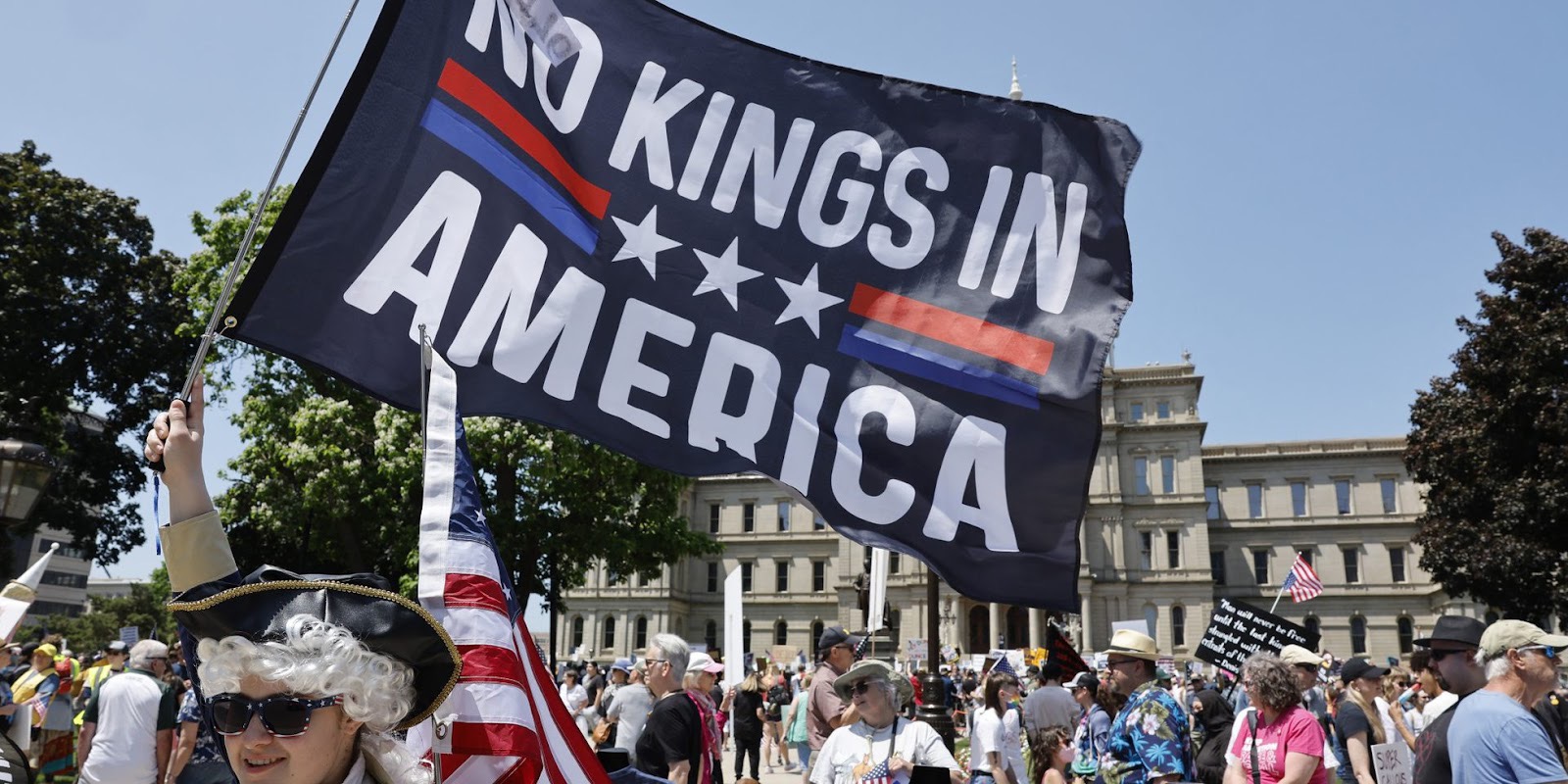
Image 6. Le proteste del movimento No Kings negli Stati Uniti © JEFF KOWALSKY/AFP via Getty Images
June was characterised by mass mobilisations in the United States. Despite the evident overlap in their temporal domains, their origins are not congruent. First and foremost, protests in Los Angeles on June 61 were initiated against Immigration and Customs Enforcement (ICE), which conducted raids on clothing warehouses in the city centre, in the Fashion District, and at a Home Depot in Westlake the previous month following the implementation of a mass deportation strategy.
From the Metropolitan Detention Center2, where clashes with the Los Angeles Police Department were reported, the demonstrations disseminated to the suburbs of Paramount and Compton3. The propagation of anti-ICE protests led to the deployment and federalization of the California National Guard under Title 10 of the United States Code4. This action bypassed Governor Gavin Newsom, a circumstance that had not occurred since 1965, when the civil rights movement manifested in Selma and Montgomery. President Trump also activated the Marine Corps Air Ground Combat Center Twentynine Palms and the United States Northern Command. The last time the domestic armed forces were used for civil control purposes was during the Civil War. In fact, on June 12, Federal Judge Charles Breyer of the Northern District of California5 issued an order declaring the military deployment illegal and in violation of the Posse Comitatus Act of 1878. Judge Breyer concluded that “there was no rebellion, nor was civilian law enforcement unable to respond to the protests and enforce the law”. However, on June 19, the Ninth Circuit Court of Appeals6 issued a stay of the order, pending an appeal. One particularly troubling aspect of the case was the attacks on journalists by law enforcement7. The Committee to Protect Journalists, the First Amendment Coalition, and the Freedom of the Press Foundation jointly published a letter to the Secretary of the Department of Homeland Security,Kristi Noem, expressing concern that “in some cases, federal officers appear to have deliberately targeted journalists who were doing nothing more than their job covering the news”8.
During the anti-ICE protests, over 200 progressive organizations, including the American Civil Liberties Union, the American Federation of Teachers, Communications Workers of America, Social Security Works, Public Citizen, and MoveOn, led by Indivisible9, spearheaded the “No Kings” – or “No Dictators”, “No Tyrants” – protests across the country. These demonstrations coincided with the U.S. Army’s 250th Anniversary Parade in Washington, D.C., and President Trump’s 79th birthday10. The protests focused on Trump’s policies, associated with a perceived democratic regression. Protesters characterized the President’s actions as monarchical, a term that President Trump himself has used to describe his leadership style11. Organizers estimated that over five million people participated in more than 2,100 cities and towns across the United States, with additional protests in Guam, the Northern Mariana Islands, Puerto Rico, the U.S. Virgin Islands, and 20 foreign countries12.
July: the significance of identity and governance
Image 7. Ultra-Orthodox Jewish men protest against the draft on July 16, 2024, in Bnei Brak, Israel via Itai Ron, Getty Images
July began with large-scale protests from the Haredi community of ultra-orthodox13.
To light the flames of the uprising was the decision of the High Court of Israel, which revoked the historical right of the latter community to abstain from military service.
Since the establishment of the State of Israel, the Haredi orthodox community (representing 13.6% of the total population14) has been exempt from the military conscription in order to respect their religious belief that the state is illegitimate as it came into being before the return of the Messiah.

Street protests brought renewed attention to the political implications of the ruling, placing the government under significant pressure.
Although they condemned the Court’s decision, the Haredi parties ultimately refrained from formally withdrawing from the governing coalition. This stance temporarily preserved governmental stability while simultaneously exposing how a moral debate over equality of service has become inseparable from the logistical demands of military mobilisation in wartime.
Meanwhile, just a week later, Abu Dhabi hosted a bilateral meeting15 between the Azeri prime minister, Aliyev, and the Armenian representative, Pashinyan. This first-time-direct contact marked the initiation of mediation talks for a desirable long-term commitment to peace in the area. Following the 2020 war in the Karabakh region and the subsequent military operation two years later, the settlement of concessions and areas of control became a key issue to be discussed in the high politics environment. While the talks of the 10th of July did not produce a definitive peace treaty, they did produce a significant political statement.
For the first time, the discussions were held without external interventions (especially from Russia), allowing the conflict to switch from a conflict-negotiation duality to a security, borders, and logistics orientation.
July saw Thailand’s political landscape was once again shaken when the Constitutional Court suspended Prime Minister16 Paetongtarn Shinawatra over a leaked phone call with Cambodia’s former leader Hun Sen, sparking protests and debate about executive accountability.
Although the suspension was formally justified as a response to alleged ethical breaches, it was carried out in an environment of repeated judicial interventions in Thai politics, where courts and unelected institutions have frequently constrained elected leaders.
This development was not an isolated incident, but rather fits into a longer pattern of civilian authority struggling to assert itself amid powerful conservative and institutional forces, highlighting how legal mechanisms are often intertwined with broader political contestation in the kingdom.
August: between politics and climate

Image 8. Ukrainian President Volodymyr Zelenskiy speaks during the meeting with U.S. President Donald Trump, French President Emmanuel Macron, British Prime Minister Keir Starmer, and Finland’s President Alexander Stubb amid negotiations to end the Russian war in Ukraine, at the White House. REUTERS/Alexander Drago
On August 15, US President Trump met with Russian President Putin in Alaska to continue discussions on a ceasefire in Ukraine. The meeting was anticipated with great expectations, but less was concretely decided. Russia committed to ending the war, but only after the elimination of the “primary causes”. Trump described the meeting as a “10 out of 10” but neither President accepted questions during the subsequent press conference17. It could be said that the main significance of the event was to send a message to Europe, always more sidelined and internally divided. In fact, days later the White House invited Ukrainian President Zelensky and the European Union in the person of EC President Ursula Von der Leyen, British PM Starmer, Italian PM Meloni, French President Macron, German Chancellor Merz, Finland President Stubb and Secretary General of NATO Rutte.
Late this month, the US began to form a naval buildup in the southern Caribbean with the aim of combating drug trafficking18, even if they mostly enter the border via land19. By the end of the month, seven US warships and a nuclear-powered fast attack submarine were placed in the area along with more than 4500 sailors and marines. In response to these tensions, Venezuela mobilized a naval deployment around its main oil hub and President Maduro stated he “would constitutionally declare a republic in arms” if the country was ever attacked by the US20.
From Latin America news stories surfaced about former Brazilian President Jair Bolsonaro receiving a 27-year jail sentence for plotting a coup and former Colombian President Alvaro Uribe sentenced to 12 years of house arrest for bribery and witness tampering.
At the beginning of the month India and Philippines staged their first joint sail and naval exercise in the exclusive economic zone of disputed South China Sea, all claimed by the PRC.
Regarding the Gaza front, on 20 August Israel announced it had formally begun the first stages of the offensive aiming to seize control of Gaza City, with the idea of killing “as many Palestinians as possible”. Famine has been declared and more than half a million Palestinians are currently facing inhuman conditions – an unacceptable situation for a developed world21. Like every year, the world has also shown the effects of climate change. Spain and Portugal witnessed a historic wave of wildfires, with estimated one million hectares being burned only in European Union territory this year – the highest record since 2006 when they started collecting these data. The Iberian Peninsula leads with about 60% of the total burned area in Europe22. Meanwhile in India, Pakistan and Nepal monsoon rains caused flash floods, forcing thousands to flee and claiming more than 400 lives23.
September: Territorial Posturing – The South China Sea, Ukraine, and the UN Mandate

Image 9. Tasnim news agency: https://www.tasnimnews.com/en/news/2017/08/01/1480212/president-xi-says-china-loves-peace-but-won-t-compromise-on-sovereignty.
September saw a significant intensification of Russian operations against Ukraine24. The response was twofold: on the one hand, Poland and other NATO members strengthened their airspace defenses, and on the other, the European Union extended sanctions against Russia for another six months in support of Ukraine’s territorial integrity.
Meanwhile, Beijing held a military parade for the 80th anniversary of the Victory over Japan. In official speeches and state media coverage, President Xi Jinping emphasized strength by asserting the rise of the People’s Republic of China as a global power25.
The Chinese government also approved the creation of a nature reserve on a disputed atoll in the South China Sea (Scarborough Shoal), strengthening its territorial position26.
In the context of the prolonged war with Hamas, the Israeli army intensified military operations in Gaza, including bombing Gaza City and ordering the evacuation of the civilian population. In this regard, the UN has approved a resolution calling on Hamas to disarm and withdraw from the Gaza Strip27.
October: a human rights backsliding?
Image 10: A search for victims of an airstrike on an internally displaced persons camp in LaEi village in Pekon township in Shan State, Myanmar, September 6, 2024. © 2024 Stringer/EPA-EFE/Shutterstock
In October 2025, the ongoing impact of economic friction, humanitarian crises and growing concerns about democratic deficit continue to shape global politics.
From an economic perspective, the month closed with significant development in the U.S.–China trade relations. After months of tariff escalation on both sides, President Donald Trump and the Chinese leader Xi Jinping agreed upon a meeting on October 30 in South Korea to reduce key tariffs, signalling a tentative effort to stabilise tensions28.

The aim was to alleviate the heavy burden on strategic sectors, including clean technology and critical minerals, for a green transition. These negotiations highlighted that trade policy in 2025 remains a central arena of great‑power competition and cooperation.
Meanwhile, ongoing crises in Myanmar drew attention to connections between conflict, human rights abuses, and people’s displacement. Throughout October, clashes involving the Tatmadaw and local armed groups, including airstrikes and large raids, highlighted the fragile security situation and its consequences for civilians in several regions. These ongoing developments illustrate how prolonged violence continues to generate displacement pressures and complicate regional migration dynamics29.
Taking into account all the ongoing conflicts throughout the 2025 geopolitical landscape, the Human Rights Watch’s World Report 2025 provided a broader assessment of how armed conflicts and democratic backsliding are, indeed, undermining norms meant to protect civilians. The report documented severe human rights violations and crises in places such as Gaza, Sudan, and Ukraine30, emphasising the global scale of abuses and the challenges facing accountability mechanisms.
November: The Mamdani specter

Image 11. “Zohran Mamdani Speaking at a DSA 101 Meeting at the Church of the Village in NYC” by Bingjiefu He is licensed under CC BY-SA 4.0.
On November 4th, New York elected Zohran Mamdani as mayor. Born in 1991 to parents of Indian-Ugandan heritage, he triumphed over Andrew Cuomo, former governor of New York, in the Democratic primaries in June, largely due to the support of young voters, migrant communities, urban workers, environmental activists, and progressives31. Conversely, New York’s economic elites mobilized billions of dollars through super PACs to stop his candidacy. Nevertheless, he emerged victorious in New York, garnering 50.78% of the vote and a record turnout of over 40% of eligible voters32.
He can be said to be the first Muslim mayor in the history of the city of 9/11; the first of South Asian origin to attain this position; and the youngest elected mayor in New York since 1982, thanks to the support of generations – Millennials and Gen Z33 – who historically have demonstrated low voter turnout in municipal elections.
However, New York voters’ most significant revolution lies at a political level: if Mamdani is, as he says and as his programme suggests, a “democratic socialist,” he will be the first explicitly socialist mayor of a major city since World War II34. His electoral platform was anchored in three key tenets: urban affordability, climate transition, and wealth redistribution. This included proposals for free public transport throughout the city, the abolition of MTA fares, a freeze on rent-stabilized apartments, the construction of 200,000 new affordable housing units, the establishment of five municipal supermarkets (one per borough) run directly by the city government to reduce the prices of basic foodstuffs, and universal free childcare services financed through progressive taxation35. Such reforms have not been seen in the United States since before the neoliberal counter-revolution of the 1980s. Moreover, according to Mamdani, “climate and quality of life are not two separate concerns. They are, in fact, one and the same36”. The intention is to invest in green infrastructure, such as energy retrofitting of buildings, expansion of green spaces, zero-emission transportation in order to create jobs and reduce economic inequality.
Eventually, Mamdani has proposed substantial increases in tax rates for corporations and individuals with annual incomes exceeding $1 million. These policies would be financed based on the concept of “social infrastructure”37, which refers to the mobilization of public credit towards assets that underpin health, education, and resilience.Despite the attempts to undermine Mamdani’s candidacy through the substantial funding of Cuomo’s election campaign, the support for outgoing Mayor Eric Adams38, who is under federal investigation for bribery, fraud, and illegal receipt of foreign campaign donations, and even the threat of arrest for Mamdani at a press conference39, New York has demonstrated, on the one hand, the efficacy of social media platforms as tools for political mobilization. A confluence of events, including the turbulent summer in the US, led to anti-Trump hashtags being amplified by algorithms. Together with the strategic use of social media during Mamdani’s election campaign, this resulted in a narrative overlap. In urban contexts, therefore, political “virality” emerges as a mobilization mechanism analogous to traditional forms of party organization in presidential elections.
Conversely, as also shown by the victories of progressive mayors in Seattle, Minneapolis, and other cities in the 2010s, as well as the New York elections, confirmed that social democratic policies are appealing in the face of challenges such as housing crises, extreme economic inequality, and accelerating climate deterioration, favoring leaders who propose structural change.
December: What about democracy?

Image 12. Hong Kong’s Democratic Party announces on February 20, 2025, that it will set up a task force to discuss the procedure for disbanding. Photo: Kyle Lam/HKFP.
Although some important developments have been registered regionally, the last month of 2025 has been more stable geopolitically than the rest of the year.
Hong Kong’s largest pro-democracy party voted to dissolve with 97% of the votes after its foundation in 1994, and became a symbol of multilateralism worldwide. Former chairperson Yeung Sum said that the party’s disbandment indicated the regression of the state from being a free and liberal society. Former party leader Emily Lau said the decision was due to the political environment but declined to provide details of the issues the party was facing40.
In the days leading up to the end of the year, news emerged from Asia of a ceasefire between Thailand and Cambodia after weeks of deadly clashes that had forced nearly one million people to flee. Following discussions held in southwestern China, both sides agreed to freeze the front lines where they are now, ban reinforcement and allow civilians to return to their homes. The dispute between these two countries dates back more than a century but broke out this year following a group of Cambodian women singing patriotic songs in a disputed temple41.
Meanwhile, tensions have been growing between South Africa and the USA and escalated in Pretoria being excluded from the G20 meeting. Foreign Minister Ronald Lamola recently stated that the country “won’t bow to US pressure to change its policies on race” following accusations of racism against its white citizens by Secretary of state Marco Rubio. Convinced of its truth, Washington is offering asylum to Afrikaners and, despite reduction in yearly intake of refugees, President Trump said they will be prioritized. It should be noted that the majority of those affected are descendants of white settlers. In recent weeks, South African immigration authorities raided a US migrant processing centre in the capital, arresting seven Kenyans working there illegally. This was considered “unacceptable” by the State Department spokesperson Tommy Pigott42.
The United States has also played a crucial role in another part of Africa, in fact US Africa Command in partnership with national and regional authorities conducted strikes against ISIS terrorists in the northwest part of Nigeria on Christmas day, with the aim to “protect Americans and disrupt violent extremist organizations wherever they are43”. President Trump described this operation in a post on Truth Social saying that “the US launched a powerful and deadly strike against ISIS terrorist scum in northwest Nigeria, who have been targeting and viciously killing, primarily, innocent Christians at levels not seen for many years, and even centuries!”. Nigerian authorities rejected accusations of Christian genocide, noting that armed groups across the country are killing indistinguishably Muslims and Christians44.
Regarding the European Union, a decision has been reached on frozen Russian assets: cash will be borrowed to loan $105 billion to Ukraine to fund its defence against Russia for the next two years. Members also gave the EC a mandate to continue working on a reparations loan based on Russian immobilised assets, but this is currently unworkable mainly due to resistance from Belgium.
Conclusions
Looking back at 2025 as a whole, one recurring theme emerges with striking clarity: the international system is not merely in crisis, but in transition. The events outlined – from shifting alliances and contested sovereignties to domestic unrest and institutional strain – point to a world grappling with the erosion of old certainties and the absence of fully formed alternatives.
What makes 2025 particularly significant is not the singularity of any one event, but the accumulation of pressures across multiple domains. Military conflict, democratic fragility, economic weaponization, and climate emergencies increasingly intersect, reinforcing one another rather than unfolding in isolation. At the same time, moments of diplomacy, civic mobilisation, and institutional resistance suggest that political agency and collective response remain possible, even in an era of fragmentation.
As we move into 2026, the challenge will not simply be to react to crises, but to interpret them. Understanding the trajectories set in motion over the past year is essential for policymakers, scholars, and citizens alike.
- Hosford, T. (2025, December 23). Protests in the Age of Acceleration: June 2025 LA Lessons. International SOS. https://www.internationalsos.com/insights/protests-in-the-age-of-acceleration-lessons#:~:text=ICE%20operations%20across%20Los%20Angeles ↩︎
- Uranga, R., Ellis, R., Harter, C., Vives, R., Mehta, S., & Purtill, C. (2025, June 8). ICE raids across L.A. spark backlash; Trump officials defiant – Los Angeles Times. Los Angeles Times. https://www.latimes.com/california/story/2025-06-06/la-me-ice-raids-protests-color-scene ↩︎
- Vives, R., Uranga, R., Purtill, C., Hussain, S., Gomez, M., & Mehta, S. (2025, June 8). 2,000 National Guard troops will be sent to L.A. amid immigration clashes – Los Angeles Times. Los Angeles Times. https://www.latimes.com/california/story/2025-06-07/paramount-home-depot ↩︎
- Hubler, S., & Rosenhall, L. (2025, June 7). Trump is calling up National Guard troops under a rarely used power. New York Times. https://www.nytimes.com/2025/06/07/us/trump-national-guard-deploy-rare.html ↩︎
- Cheney, K., & Gerstein, J. (2025, September 2). Judge rules Trump can’t act as national police chief. Politico. https://www.politico.com/news/2025/09/02/trump-los-angeles-national-guard-ruling-00539393 ↩︎
- Gerstein, J., & Cheney, K. (2025, July 28). Judges press Trump administration on deportation quotas. Politico. https://www.politico.com/news/2025/07/28/judges-trump-administration-deportation-quotas-00480899 ↩︎
- Staff, C. (2025, June 10). Law enforcement injure multiple journalists, others assaulted while covering Los Angeles protests. Committee to Protect Journalists. https://cpj.org/2025/06/law-enforcement-injure-multiple-journalists-others-assaulted-while-covering-los-angeles-protests/ ↩︎
- Cfr. The NewsGuild-CWA. (2025, June 10). A letter to Kristi Noem: The targeting of reporters in LA is inexcusable. The NewsGuild. https://newsguild.org/a-letter-to-kristi-noem-the-targeting-of-reporters-in-la-is-inexcusable/ ↩︎
- Schneider, C. M. (2025, June 14). Anti-Trump No Kings protests flood American streets ahead of military parade. NPR. https://www.npr.org/2025/06/14/nx-s1-5432708/no-kings-protests-military-parade ↩︎
- Drenon, B. (2025, June 14). What to expect at Trump’s military parade and “No Kings” protests. BBC News. https://www.bbc.com/news/articles/c9dqz4jdzy2o ↩︎
- Woodward, A. (2025, February 20). Donald Trump declares himself ‘king’ after striking down New York congestion pricing. The Independent. https://www.independent.co.uk/news/world/americas/us-politics/trump-long-live-the-king-twitter-b2701329.html ↩︎
- End of day statement – No kings no incident. (n.d.). Google Docs. https://docs.google.com/document/d/1wr0b0dmnfBQ6js-QvZzHJFVChPgpCPad4lbvuHAxXx0/edit?tab=t.0#heading=h.4h93ipge435 ↩︎
- “Preferiremmo morire piuttosto che arruolarci”: gli ebrei Haredi giurano di sfidare la coscrizione. (2024, July 6). Invictapalestina. https://www.invictapalestina.org/archives/52208 ↩︎
- Jppi. (2026, January 1). המכון למדיניות העם היהודי – JPPI. The Jewish People Policy Institute – Action Strategies for the Jewish Future. https://jppi.org.il/en/ ↩︎
- Geybullayeva, A. (2025, July 17). Colloqui diretti ad Abu Dhabi: un nuovo capitolo per la pace tra Armenia e Azerbaigian? Macondo. https://www.macondo.it/2025/colloqui-diretti-ad-abu-dhabi-un-nuovo-capitolo-per-la-pace-tra-armenia-e-azerbaigian/ ↩︎
- Ratcliffe, R. (2025, July 1). Thailand’s PM Paetongtarn Shinawatra suspended over leaked Hun Sen call. The Guardian. https://www.theguardian.com/world/2025/jul/01/thailands-pm-paetongtarn-shinawatra-suspended-over-leaked-call ↩︎
- No breakthrough after Trump and Putin meet for over two hours at Alaska summit. (2025, August 16). Le Monde.fr. https://www.lemonde.fr/en/international/article/2025/08/15/trump-putin-meeting-in-alaska-a-high-stakes-summit-for-a-ceasefire-in-ukraine_6744403_4.html ↩︎
- Cano, R. G., & Toropin, K. (2025, August 29). US warships in South America and the reaction in Venezuela. Navy Times. https://www.navytimes.com/news/your-military/2025/08/29/us-warships-in-south-america-and-the-reaction-in-venezuela/ ↩︎
- A surprise US Navy surge in the Caribbean. (2025, August 26). The Economist. https://www.economist.com/the-americas/2025/08/26/a-surprise-us-navy-surge-in-the-caribbean ↩︎
- Buitrago, D. (2025, September 1). Venezuela’s Maduro says US seeking regime change with naval build-up. Reuters. https://www.reuters.com/world/americas/venezuelas-maduro-says-us-seeking-regime-change-with-naval-build-up-2025-09-01/ ↩︎
- Rowlands, L., Quillen, S., Magee, C., Adler, N., & Najjar, F. (2025, August 27). Updates: Palestinians displaced as Israel pushes deeper into Gaza City. Al Jazeera. https://www.aljazeera.com/news/liveblog/2025/8/26/live-world-outraged-over-israeli-attack-on-gaza-hospital-journalists ↩︎
- The August 2025 wildfire wave: an unprecedented challenge for firefighters and forest engineers. (2025, September 10). Vallfirest. https://www.vallfirest.com/en/news/europe-august-2025-wildfires ↩︎
- Devastating floods highlight need and challenges for warnings. (2025, August 6). World Meteorological Organization. https://wmo.int/media/news/devastating-floods-highlight-need-and-challenges-warnings ↩︎
- Weekly Geopolitical News Bulletin: September 27 – October 3, 2025. (2025, October 4). Mackinder Forum. https://mackinderforum.org/geopolitical-newsletter/weekly-geopolitical-news-bulletin-september-27-october-3-2025?utm_l ↩︎
- Xi alla parata vestito come Mao, “la Cina è inarrestabile.” (2025, September 4). Agenzia ANSA. https://www.ansa.it/sito/notizie/mondo/2025/09/03/xi-alla-parata-vestito-come-mao-la-cina-e-inarrestabile_b0e65c8d-b701-484f-8d3e-acfc17ab35a6.html ↩︎
- Chik, H. (2025, September 10). China approves nature reserve at contested Scarborough Shoal. South China Morning Post. https://www.scmp.com/news/china/diplomacy/article/3325047/china-plans-nature-reserve-contested-scarborough-shoal ↩︎
- Gaza, Idf: useremo forza senza precedenti a Gaza City, evacuate. (2025, September 20). SkyTG24. https://tg24.sky.it/mondo/2025/09/19/guerra-israele-palestina-gaza-19-settembre-diretta ↩︎
- Klein, B., Regan, H., Chowdhury, M., Sangal, A., Powell, T. B., & Yeung, J. (2025, October 30). October 30, 2025 – Trump-Xi meeting. CNN. https://edition.cnn.com/politics/live-news/trump-south-korea-china-xi-government-shutdown-10-29-25 ↩︎
- Wikipedia contributors. (2025, December 28). 2025 in Myanmar. Wikipedia. https://en.wikipedia.org/wiki/2025_in_Myanmar?utm_ ↩︎
- World Report 2025 is Here! (2025, January 17). Human Rights Watch. https://www.hrw.org/the-week-in-rights/2025/01/17 ↩︎
- Zohran Mamdani’s Victory and What It Means for Progressive Governance. (2025, November 7). SDG News. https://sdgnews.com/zohran-mamdani-election-2025/#:~:text=Taxi%20drivers%20leaned%20out%20of%20windows%2C%20students%20spilled%20onto%20Steinway%20Street%2C%20and%20volunteers%20who%20had%20been%20knocking%20on%20doors%20for%20months%20hugged%20in%20disbelief ↩︎
- New York, Mamdani nuovo sindaco: “Abbiamo fatto la storia, nuova era per la città.” (2025, November 5). SkyTG24. https://tg24.sky.it/mondo/2025/11/05/risultati-elezioni-new-york-zohran-mamdani-sindaco#:~:text=50%2C39%25%20dei%20voti%20(con%201.036.051%20preferenze) ↩︎
- Bergin, B., & Hong, J. (2025, November 3). NYC mayor’s race gets record early turnout fueled by young voters. Gothamist. https://gothamist.com/news/nyc-mayors-race-gets-record-early-turnout-fueled-by-young-voters ↩︎
- SDG News, op. cit. ↩︎
- SkyTG24, op. cit. ↩︎
- Cfr. SDG News, op. cit. ↩︎
- Cfr. ibidem. ↩︎
- Salam, E. (2025, November 14). On Eric Adams’ corruption case, Trump says ‘a little bit’ more than he should have. MS NOW. https://www.ms.now/rachel-maddow-show/maddowblog/eric-adams-corruption-case-trump-says-little-bit-rcna216479 ↩︎
- Detzel, A. (2025, November 14). Trump intensifies offensive against NYC’s Zohran Mamdani, muses about possible ‘arrest.’ MS NOW. https://www.ms.now/rachel-maddow-show/maddowblog/trump-intensifies-offensive-nycs-zohran-mamdani-muses-possible-arrest-rcna216462 ↩︎
- Hong Kong’s oldest pro-democracy party disbands. (2025, December 14). Le Monde.fr. https://www.lemonde.fr/en/international/article/2025/12/14/hong-kong-s-oldest-pro-democracy-party-disbands_6748485_4.html ↩︎
- Tan, Y. (2025, December 29). Thailand accuses Cambodia of breaking newly signed ceasefire. https://www.bbc.com/news/articles/c9w7wgrk01do ↩︎
- Gumede, M., & Imray, G. (2025, December 17). South African authorities raid a U.S. processing center for white migrants. Los Angeles Times. https://www.latimes.com/world-nation/story/2025-12-17/south-african-authorities-raid-u-s-processing-center-for-white-migrants-washington-protests ↩︎
- US Africa Command Public Affairs. (2025, December 25). U.S. Africa Command Conducts Strike against ISIS in Nigeria. United States Africa Command. https://www.africom.mil/pressrelease/36158/us-africa-command-conducts-strike-against-isis-in-nigeria ↩︎
- Cooper, H., Jammeh, S., & Schmitt, E. (2025, December 25). U.S. Strikes ISIS in Nigeria after Trump warned of attacks on Christians. New York Times. https://www.nytimes.com/2025/12/25/us/politics/trump-isis-nigeria-strike.html ↩︎